


Antique Furnishings and Furniture
Read the guideSave search
Popular searches
Antique Furnishings and Furniture
Origin and function of furniture
Furniture was born first of all from practical needs: storing, sitting, working, eating, sleeping, displaying objects, separating spaces. Every antique piece of furniture, even the most decorative one, almost always starts from a precise function.
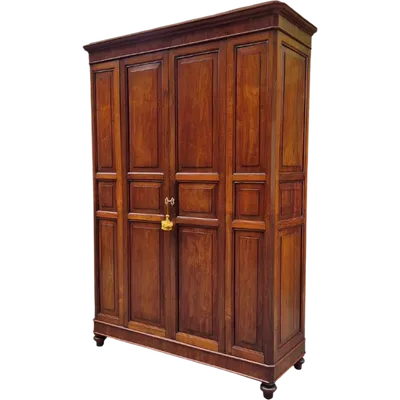
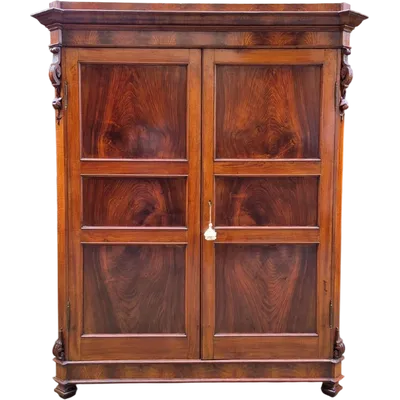
A wardrobe is used to store clothes and household linen. A sideboard was created to store and display tableware, silverware and objects related to the table. A table is a place for work, meeting or representation. An armchair is not only a seat, but often expresses an idea of comfort, status and taste.
Over time, however, furniture goes beyond simple utility. It becomes a social sign, an object of representation, an element capable of expressing the taste of an era and the way people inhabited spaces.
For this reason, when observing an antique piece of furniture, one should not only ask “what is it used for?”, but also “what kind of room did it belong to?”, “what role did it have in the home?”, “was it an everyday object, a representative piece, a religious object, a professional tool or a collectible item?”.
This question is very useful for the buyer, because it allows the piece to be read not as an isolated object, but as part of a broader story.
The main families of furniture
In the antiques and design market, furniture can be understood through several main families.
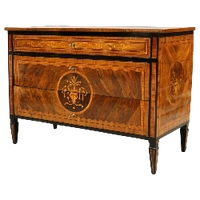
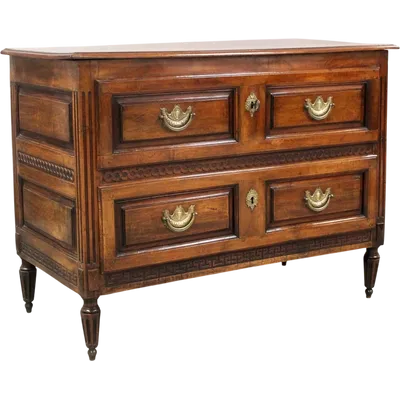
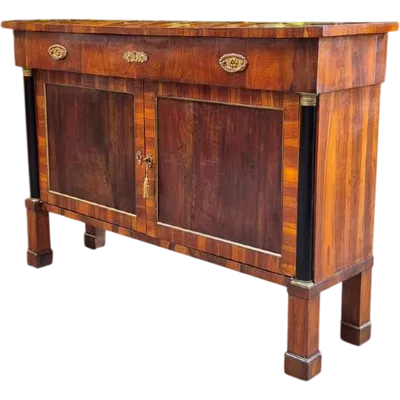
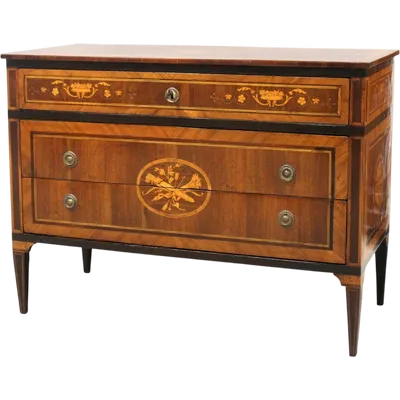
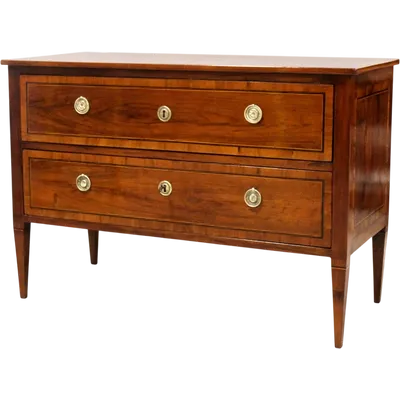
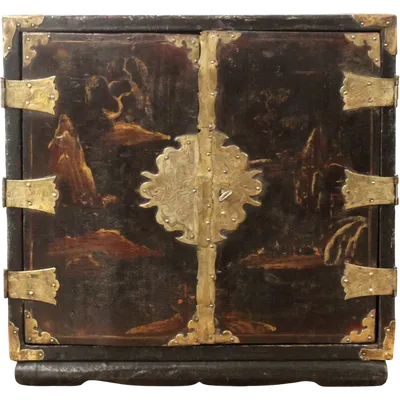
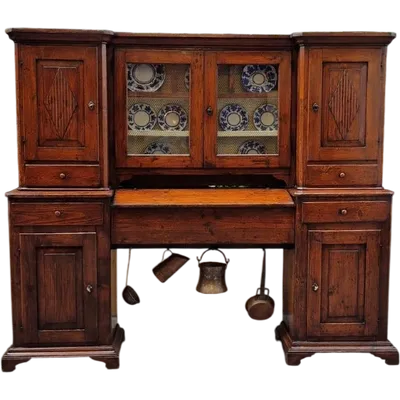
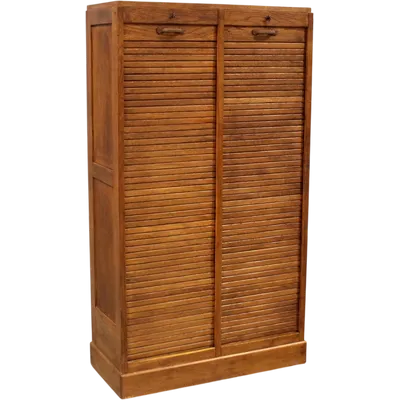
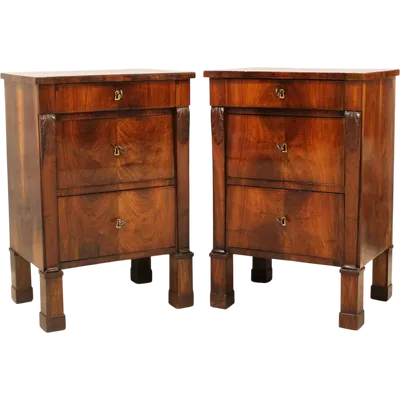
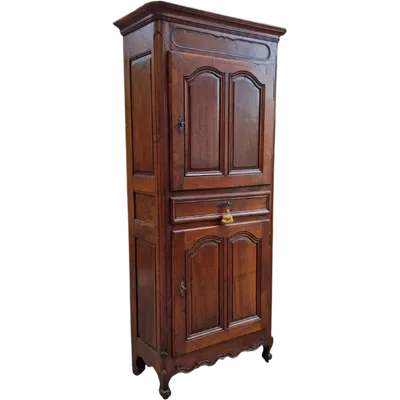
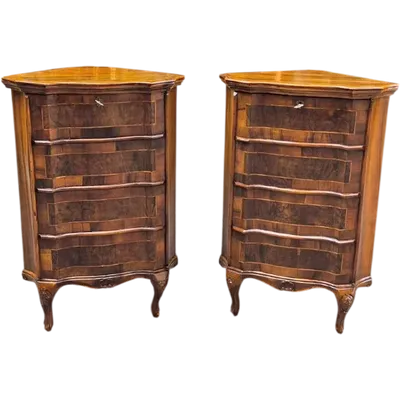
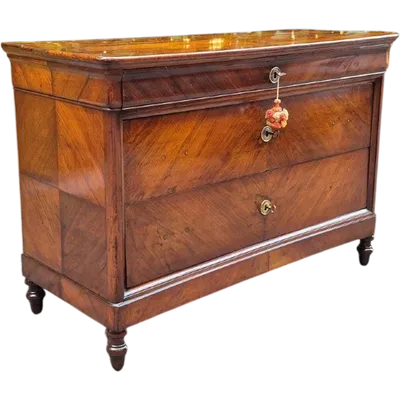
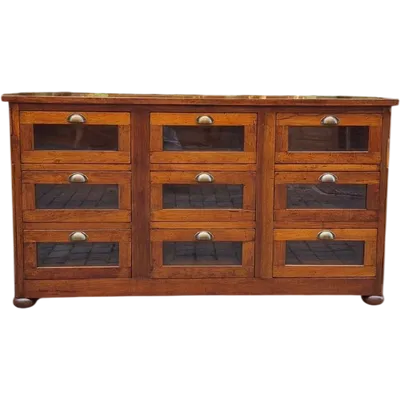
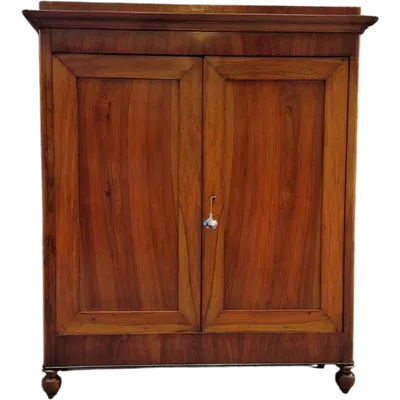
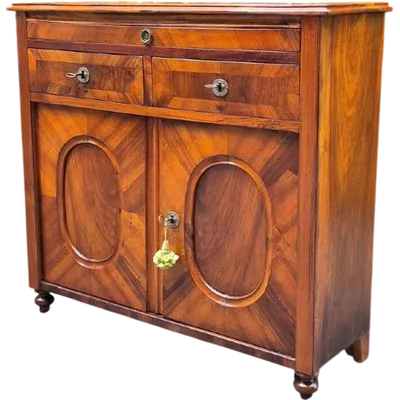
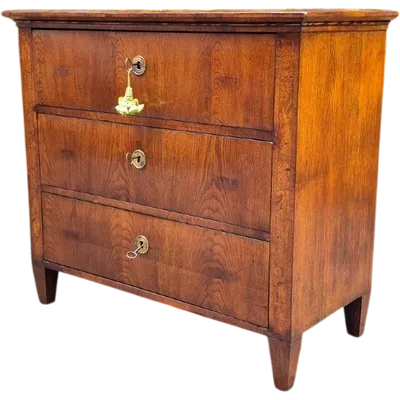
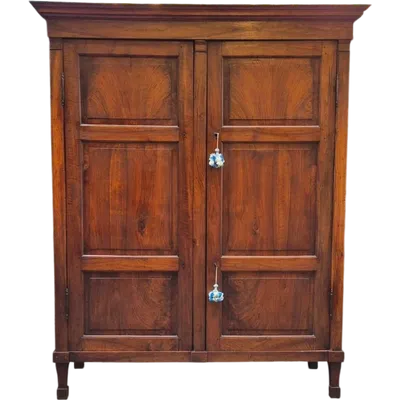
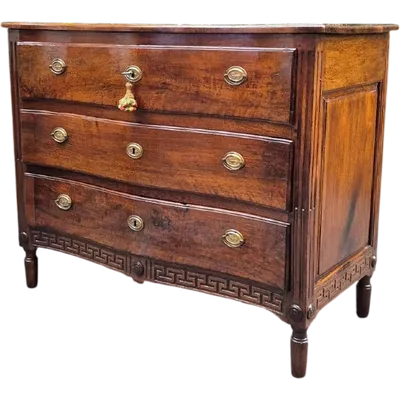
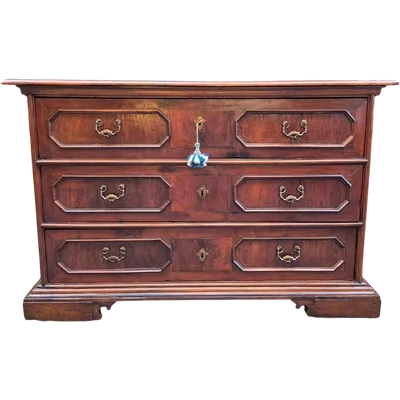
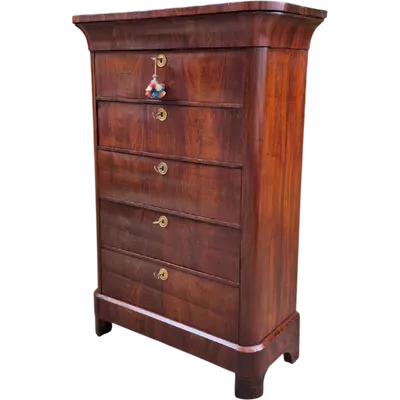
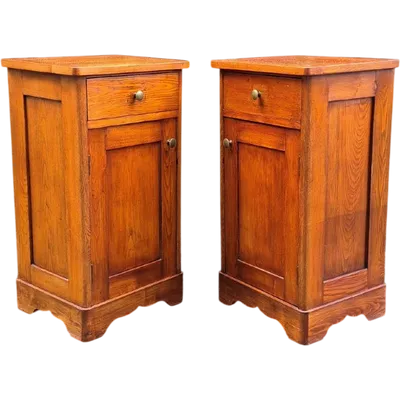
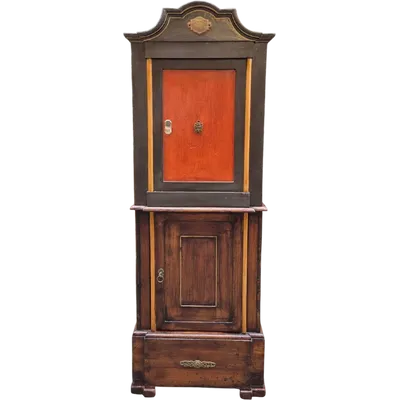
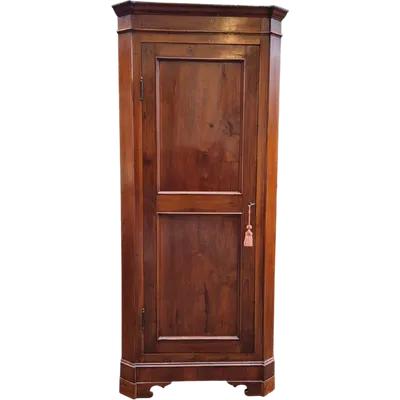
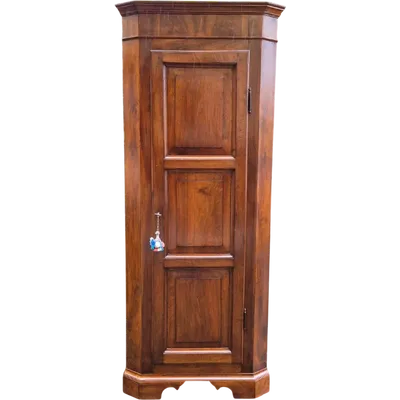
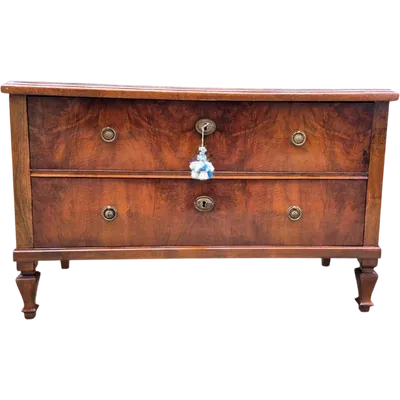
Storage furniture is among the most important. It includes wardrobes, sideboards, chests of drawers, commodes, fall-front desks, trumeaux, bookcases, display cabinets, cabinets and collectors’ cabinets. These are pieces designed to store, organize or display. They are often also among the richest objects from a decorative point of view, because they occupy walls, define a room and immediately attract the eye.
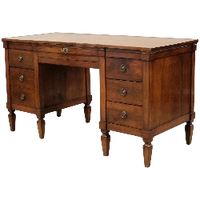
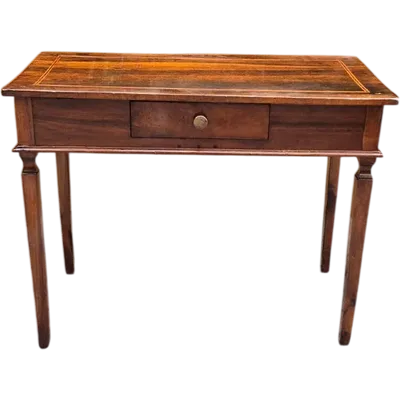
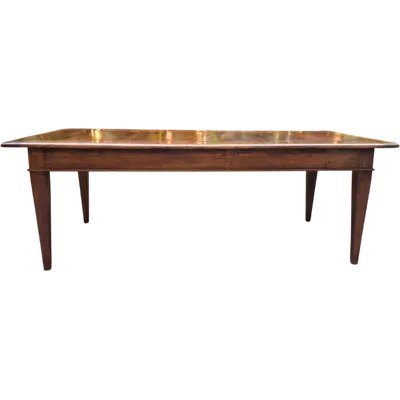
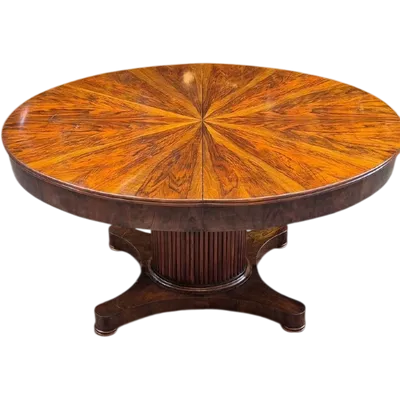
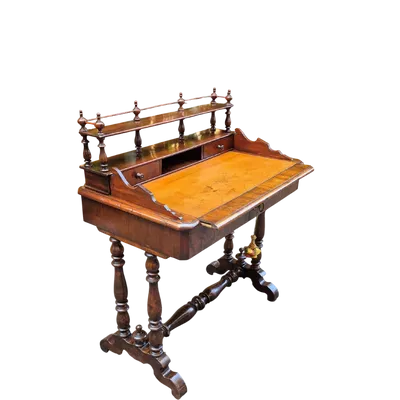
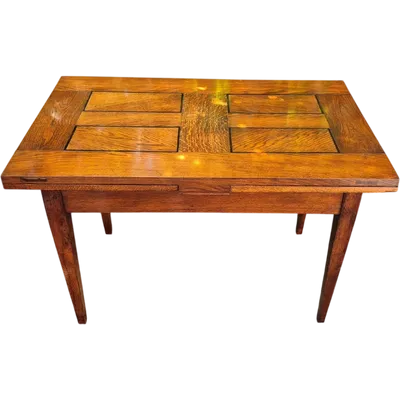
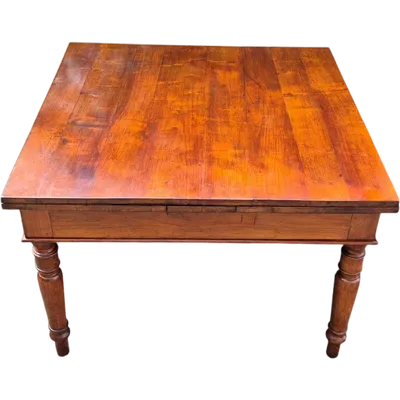
Tables and desks, on the other hand, respond to functions of work, conviviality and representation. A large dining table communicates solidity and domestic centrality. A desk or writing desk tells the world of study, administration, correspondence and intellectual work. Small tables, consoles and guéridons often have a more decorative or service-oriented function, but can be very refined in their proportions and materials.
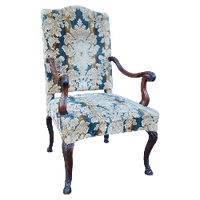
Seating is a very revealing category when it comes to the taste of an era. Chairs, armchairs, benches, stools and sofas change profoundly over time: some are rigid and formal, others more enveloping and comfortable. A Louis XVI chair, an Empire armchair, an Art Nouveau sofa or a mid-century modern seat speak very different languages, not only in terms of style, but also in the way they relate to the body and to space.
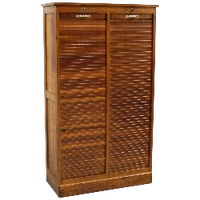
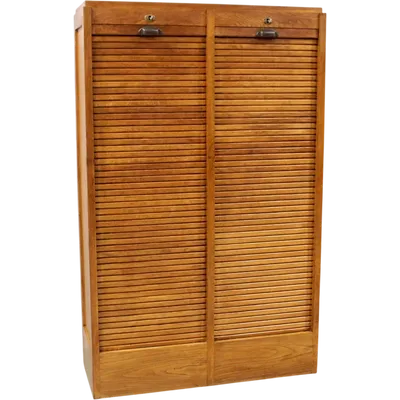
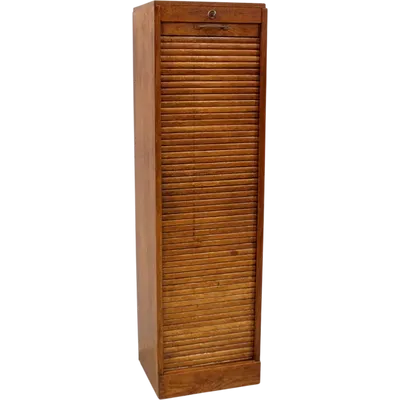
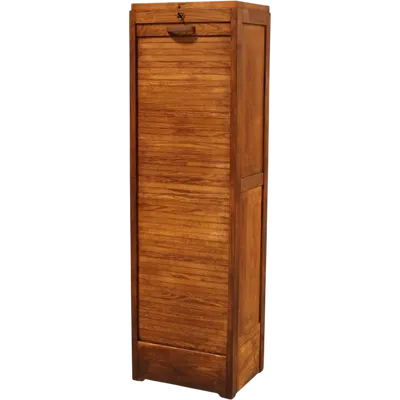
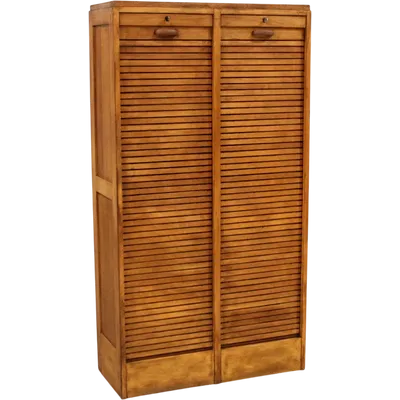
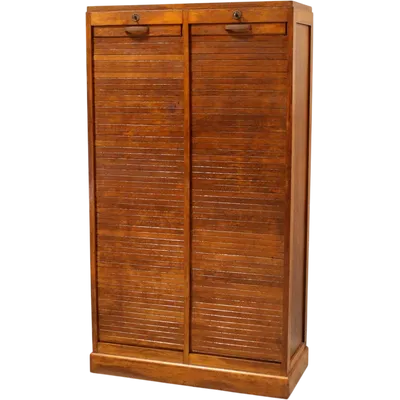
There are also more specific or particular furnishings: beds, headboards, screens, prie-dieux, billiard tables, safes, office furniture, bar carts, workbenches. These objects often tell very precise contexts: the bedroom, the study, the private chapel, the workshop, the living room, the workplace or a representative setting.
Style, period and taste
One of the most important aspects in understanding antique furniture is distinguishing between period, style and taste.
The period indicates the historical time in which a piece was made: eighteenth century, nineteenth century, early twentieth century, and so on.
Style, on the other hand, indicates the formal language: Baroque, Rococo, Louis XVI, Empire, Art Nouveau, Art Deco, Mid-century Modern. It is the way the piece “speaks”: through curves, proportions, decoration, materials and details.
Taste is broader and can survive even after the end of a style. For example, a piece made in the nineteenth century may reproduce Louis XV or Louis XVI forms without actually being from the eighteenth century. In this case, it is often described as “style” furniture.
This distinction is essential for a buyer. A period Louis XVI piece and a Louis XVI style piece may look similar, but they do not have the same historical meaning or the same market value.
Buying a style piece is not necessarily a problem, as long as it is described correctly. The point is not that it is “wrong”, but that it must be clear what is being purchased.
Some fundamental styles
Between the seventeenth and eighteenth centuries, Baroque brought a scenic, rich and dynamic taste to furniture. Pieces may have important forms, full volumes, shaped fronts, carvings, gilding and abundant decoration. It is a style that seeks presence, theatricality and visual strength.
With Rococo and the Louis XV taste, forms become lighter and more sinuous. Lines curve, legs become more dynamic, corners soften. It is an elegant, decorative, often asymmetrical language, linked to the pleasure of ornament and the refinement of aristocratic interiors.
Louis XVI and Neoclassicism change direction. After the curves of Rococo, order, symmetry, straight lines and inspiration from classical antiquity return. Furniture becomes more geometric: tapered legs, fine stringing, rosettes, columns, garlands, measured forms and controlled proportions.
The Empire style, linked to the Napoleonic age, continues the neoclassical taste but with a more solemn and monumental character. Furniture tends to be more severe, compact and architectural. Columns, bronzes, eagles, sphinxes, palmettes and symbols of power often appear.
In the nineteenth century, the panorama becomes more varied. Historicist and eclectic styles spread: furniture that revives the Renaissance, Gothic, Baroque, Louis XV or Louis XVI. It is a complex century, in which high-quality craftsmanship, bourgeois production, historical revivals and early serial processes coexist.
Between the late nineteenth and early twentieth centuries, Art Nouveau introduced fluid lines, floral motifs, forms inspired by nature and a new decorative sensitivity. Shortly afterward, Art Deco brought a more geometric, elegant and modern taste, with polished surfaces, precious woods, sharp contrasts and more synthetic forms.
In the twentieth century, finally, mid-century modern and historical design changed the language of furniture once again. Decoration often gave way to function, purity of form, innovative use of materials and quality industrial production.
Materials and surfaces
The most important material in antique furniture is wood, but not all woods play the same role.
In antique furniture, it is common to find a distinction between structure and visible surface. The internal structure may be made with more common, sturdy and locally available woods, such as poplar, fir, pine or chestnut. The external parts, instead, may use more precious or decorative woods: walnut, oak, cherry, mahogany, rosewood, bois de rose, ebony, maple, burr woods and other veneer woods.
Walnut is one of the most important woods in Italian furniture, especially between the seventeenth, eighteenth and nineteenth centuries. It has a warm, solid, elegant presence, and can be used both as solid wood and as veneer.
Mahogany is strongly associated with English, neoclassical and nineteenth-century taste, but it is also found in continental productions. It has a deep color and a refined surface.
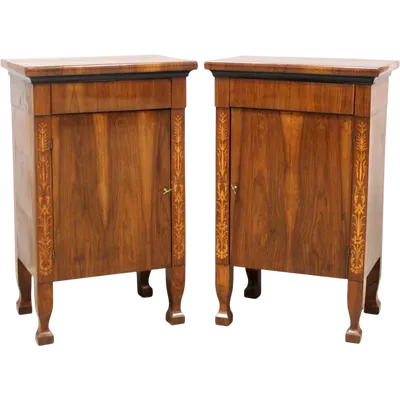
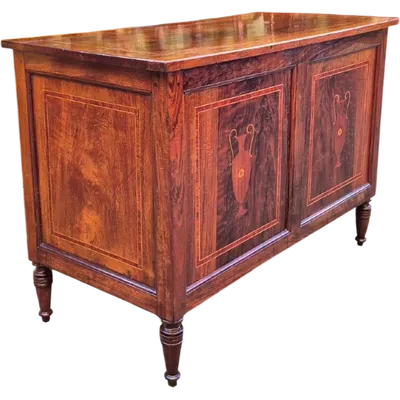
Burr woods and decorative veneers allow for more scenic effects: vibrant surfaces, mirrored patterns, chromatic contrasts, stringing and inlays.
Alongside wood, other materials often appear: marble, gilt bronze, brass, iron, leather, velvet, silk, Vienna straw, glass, mirror, mother-of-pearl or lacquered materials. Each of these elements contributes to dating and interpreting the piece.
A marble top, for example, is not only an aesthetic detail: it may indicate a function, a period, a provenance or a certain level of quality. In the same way, gilt-bronze hardware can be an integral part of the decorative language of the piece, not merely an accessory.
Construction techniques and details to observe
To understand a piece of furniture, one must also look where people normally do not look.
The most sincere parts are often the least visible ones: backs, bottoms, drawer interiors, rear sides, undersides, joints, hardware, nails and traces of workmanship.
In older furniture, irregularities consistent with artisanal work are often found. Joints may not be perfectly identical to one another. The boards of the back may have slightly different thicknesses. Drawer bottoms may be made from several joined boards. Nails may be forged or, in any case, less regular than industrial ones.
These characteristics are not automatically a guarantee of authenticity, but they help build a broader picture.
On the contrary, surfaces that are too perfect, interiors that are too clean, extremely regular joints, undeclared new hardware or artificial patinas may suggest a recent production, a replica or a very invasive restoration.
An antique piece of furniture does not have to be “perfect” in the modern sense of the word. It has to be coherent. Coherence is the key word: period, style, structure, materials, wear and restorations must tell the same story.
Patina, wear and restorations
Patina is one of the most important aspects and one of the most difficult to explain in words. It is not simply “dirt” or “oldness”. It is the effect of time on materials: wood changes color, the surface gains depth, edges soften, the areas touched most often become different from those less exposed.
A good patina is not uniform. A genuinely used piece shows differences: around the handles, on the edges, on the feet, along drawer borders, on supporting surfaces. These are signs that follow the logic of use.
Artificial wear, instead, often appears too evenly distributed, too “decorative”, almost theatrical. Wormholes that are all identical, repeated scratches, uniform darkening or mechanically worn edges may seem unconvincing.
Restoration is a delicate subject. Many antique pieces have been restored, and this is normal. The issue is not restoration itself, but its degree.
A conservative restoration stabilizes the piece, restores its function and respects material, patina and history. An invasive restoration can instead erase important information: replacing too many parts, over-polishing, uniforming the surfaces, changing hardware, modifying proportions or transforming the original function.
For a buyer, it is useful to distinguish between a piece that is “lived-in but sound” and one that has been “remade”. The first preserves character; the second may be decorative, but often loses part of its historical value.
Provenance and geographical variations
The provenance of a piece of furniture is important because each area developed specific tastes, materials and techniques.
Italian furniture is very varied because it reflects regional traditions. A Lombard, Venetian, Tuscan, Piedmontese, Ligurian, Roman or Neapolitan piece may have very different characteristics. In general, Italian furniture often shows a strong connection with wood, great attention to proportion and a wide variety ranging from more sober pieces to highly decorative ones.
French furniture had an enormous influence in Europe, especially between the eighteenth and nineteenth centuries. The Louis XIV, Louis XV, Louis XVI and Empire styles are fundamental references. French pieces often tend to emphasize elegance of form, quality of veneers, gilt bronzes and strong stylistic coherence.
English furniture is often associated with solid, functional and refined pieces, with extensive use of mahogany, balanced lines and an important tradition linked to desks, bookcases, seating and study furniture.
Nordic and Central European furniture may feature more sober lines, functional proportions, light woods or painted finishes, with particular attention to practicality and measure.
Naturally, these are simplifications. Provenance must always be evaluated on the individual object, because trade, fashions and mutual influences have often mixed languages and techniques.
Antique, vintage and design furniture
On Anticatrade, the “furniture” category may include very different objects: antique furniture, style furniture, vintage pieces, mid-century modern furniture and twentieth-century design.
An antique piece is mainly interesting for its period, authenticity, craftsmanship, materials and history.
A vintage piece is interesting for the taste of a more recent period, often between the middle and second half of the twentieth century. It may have decorative, cultural or collectible value even without being antique in the strict sense.
Mid-century modern furniture refers to twentieth-century furniture and objects that have become historically recognized, often connected to designers, manufacturers or recognizable formal languages.
Design adds another element: the author, the project, the production, the formal or technical innovation. A designer chair, for example, may have value not because it is rare in the traditional antiques sense, but because it represents an important design idea.
For the buyer, it is useful to understand that “old” does not automatically mean “valuable”, and “recent” does not automatically mean “less interesting”. What matters is quality, provenance, rarity, state of conservation, attribution and market demand.
Choosing a piece of furniture for a contemporary interior
One of the most interesting aspects of antique and vintage furniture is that it does not necessarily have to live in interiors furnished entirely in the same style.
An antique commode can work in a contemporary home as a focal point. A period desk can add depth to a modern study. A rustic sideboard can warm up a minimalist space. A twentieth-century designer armchair can dialogue with an antique table by creating contrast.
The secret lies in proportions and materials.
A highly decorated piece needs visual space. A dark and massive piece can become heavy in a small room, but magnificent in a bright environment. An antique seat can be beautiful, but it must also be assessed for comfort and real use. A table must be measured not only in width and depth, but also in height, legroom and relationship with the chairs.
Buying antique furniture does not simply mean purchasing a “beautiful” object. It means placing it in a living home, where function, history and atmosphere must coexist.
Authenticity and value
The value of a piece of furniture depends on many factors: period, quality, provenance, rarity, state of conservation, attribution, materials, proportions, market demand and quality of restoration.
A piece is not valuable simply because it is antique. It may be antique but common, damaged or heavily altered. In the same way, a twentieth-century piece may be of great interest if it is well designed, rare, signed or representative of a particular season in design history.
Authenticity should not be confused with perfection. An authentic antique piece may have signs of use, small losses, restorations, adaptations and transformations. What matters is that these elements are understandable and declared.
For the buyer, the most useful thing is to develop a progressive eye: first observe the general forms, then the materials, then the details, then the hidden parts. It is a bit like reading a text: first you understand the overall meaning, then you notice the words, then the nuances.
Frequently asked questions
What is meant by antique furniture?
Antique furniture refers to furniture and furnishings made in past eras, generally before modern industrial production or, in any case, according to historical techniques, materials and stylistic languages. It includes storage furniture, tables, desks, seating, beds, screens and other elements intended for the home, work or representation.
What is the difference between antique, vintage and style furniture?
An antique piece of furniture truly belongs to a past historical period. A vintage piece is more recent, often from the twentieth century, but recognizable for its taste, design or period. A style piece, on the other hand, reproduces antique or historical forms, but was made in a later period.
What are the main categories of antique furniture?
The main categories include storage furniture such as wardrobes, sideboards, chests of drawers and bookcases; tables, desks and writing desks; seating such as chairs, armchairs, benches and sofas; and other furnishings such as beds, screens, prie-dieux, billiard tables or office furniture.
Which styles are most important in antique furniture?
Among the most relevant styles are Baroque, Rococo, Louis XV, Louis XVI, Neoclassical, Empire, Restoration, Eclectic, Art Nouveau and, for the twentieth century, Art Deco and Mid-century Modern. Each style can be recognized through proportions, forms, decoration, materials and construction techniques.
How can you recognize an authentic antique piece of furniture?
An authentic piece of furniture shows consistency between structure, materials, hardware, construction techniques and signs of age. Patina, natural wear, artisanal irregularities, joints, backs, bottoms and interior parts are often more revealing than the visible surfaces.
Do restorations reduce the value of antique furniture?
Not always. A conservative restoration, well executed and respectful of the piece, can preserve its value. Invasive restorations, extensive replacements, overly polished surfaces or heavy alterations can instead reduce its historical and collectible interest.
What materials are most commonly found in antique furniture?
Antique furniture often features woods such as walnut, oak, chestnut, cherry, mahogany, rosewood, bois de rose and decorative burr woods. Internal structures may use more common woods such as poplar, fir or pine. More refined pieces may include veneers, inlays, gilt bronze, marble, leather, fabrics and Vienna straw.
Why is geographical origin important?
Origin helps to understand style, materials and techniques. An Italian, French, English, Dutch or Nordic piece of furniture may have different proportions, woods, decoration and functions. Even within the same country, there are highly recognizable regional variations.
How should you choose an antique piece of furniture for your home?
It is useful to evaluate function, dimensions, state of conservation, style and coherence with the interior. An antique piece does not necessarily have to belong to the same style as the rest of the furnishings: it often works well by contrast, as long as proportions, materials and visual presence are balanced.
Are signs of age defects?
Not necessarily. Coherent wear, patina, small irregularities and traces of use can be part of the value of a piece. They become problematic only when they compromise stability or function, or indicate poorly executed restorations, structural damage or significant alterations.