

Antique Mirrors and Mirror Frames
Read the guide
Save search
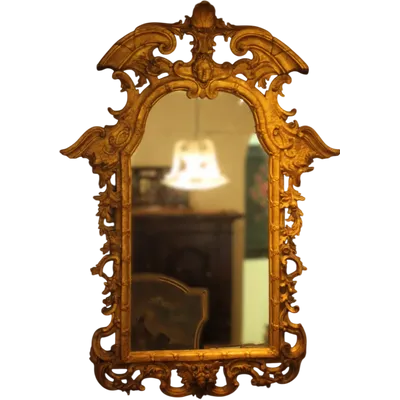
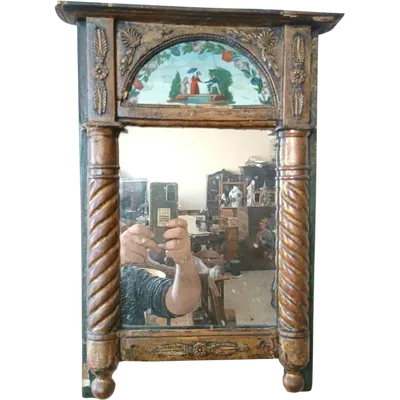
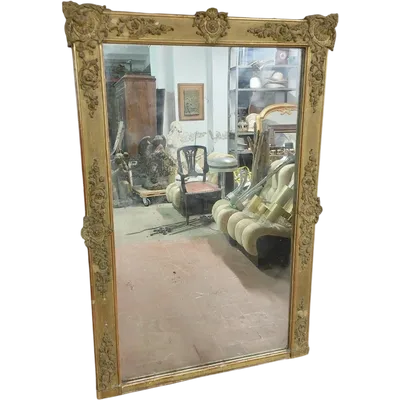
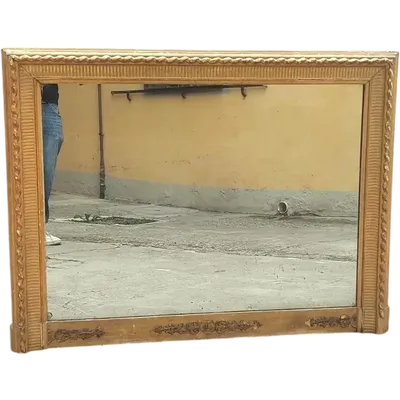
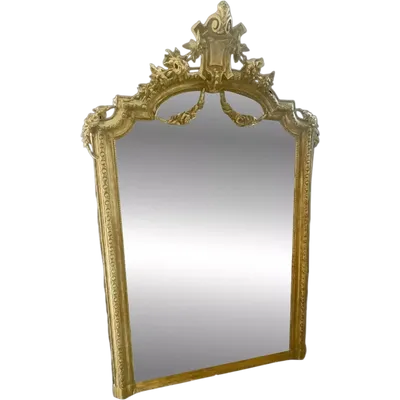
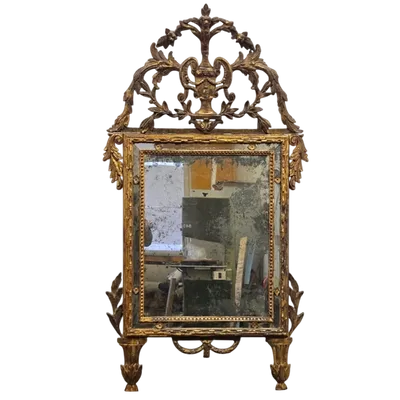
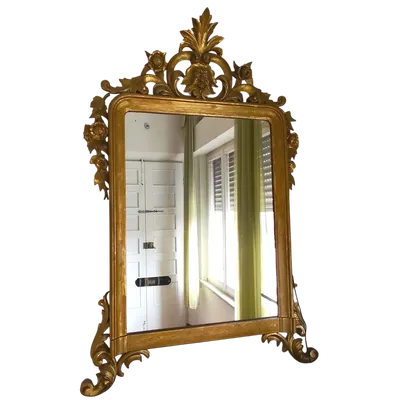
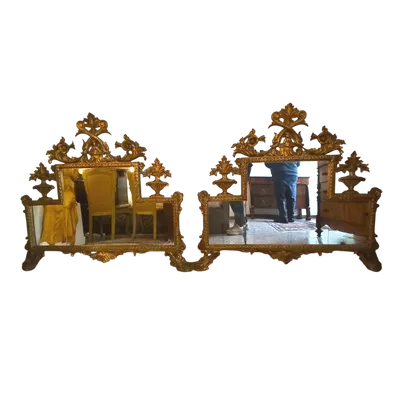
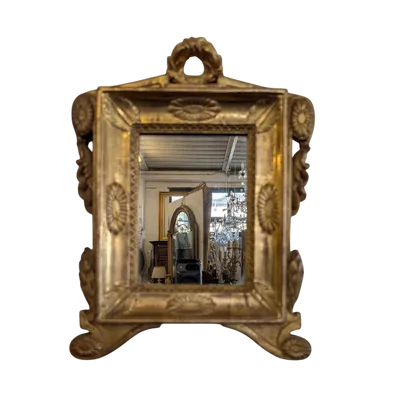
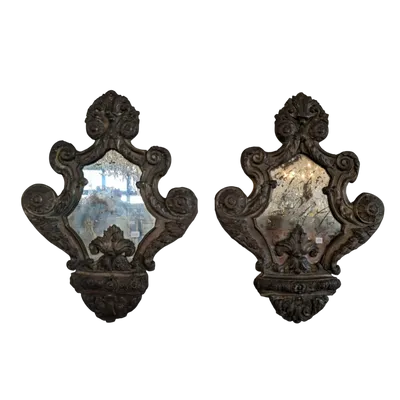
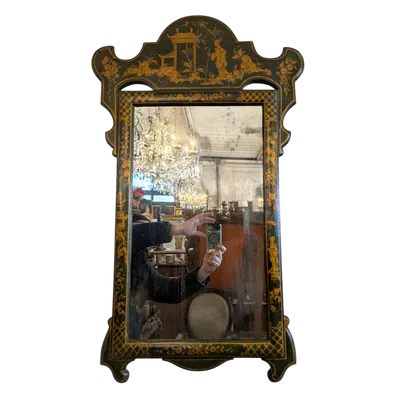
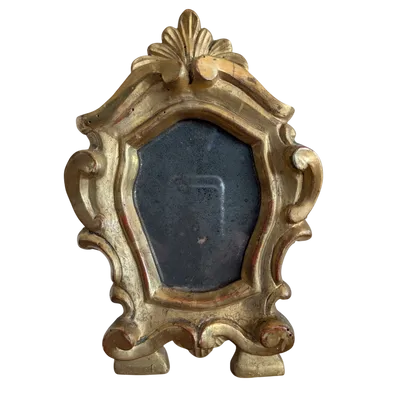
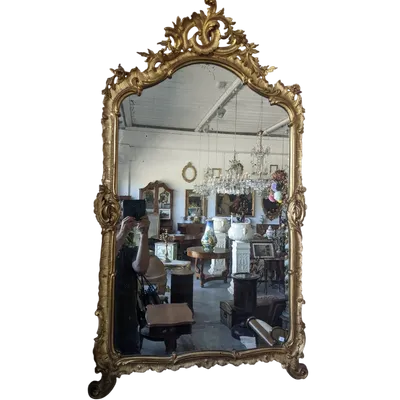
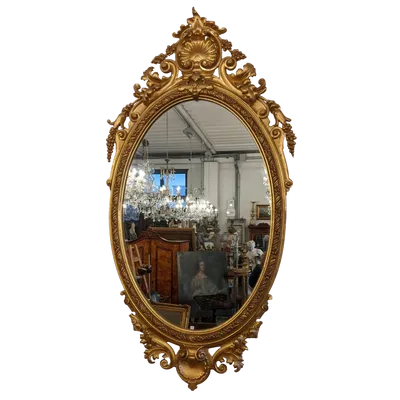
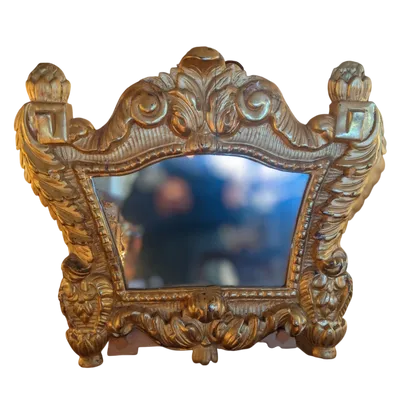
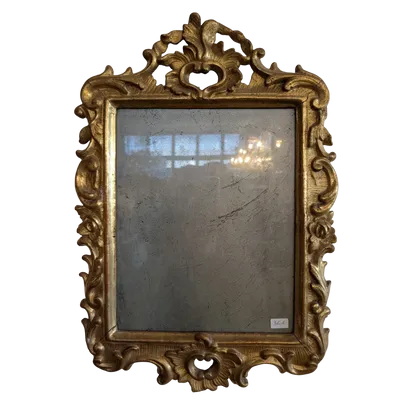
Popular searches
Antique Mirrors and Mirror Frames
Origin and function of antique mirrors and mirror frames
Antique mirrors and mirror frames belong to the broader family of decorative furnishings, but they occupy a particular position: they are neither merely decorative nor simply functional objects. In a historical interior, a mirror multiplied light, expanded the perception of space and contributed to the social representation of the home.
Before the industrial production of glass, a large reflective plate was an expensive object. This is why many antique mirrors are built almost like small architectural elements: carved frames, crests, gilding, scrolls and mouldings turn the mirror into a true focal point within the room.
Within the field of Decor, a mirror often relates to frames, consoles, fireplaces, boiserie and wall furnishings. The main difference is that, while a frame contains an image, a mirror works with light and with the surrounding room: it reflects what stands before it and changes appearance according to its position.
Main types
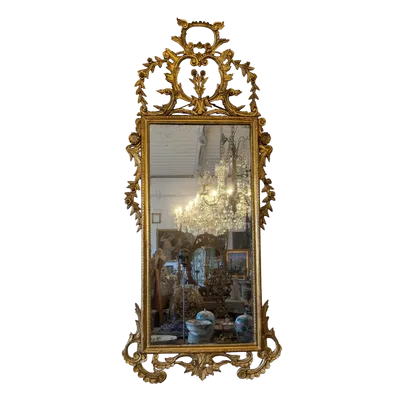
A useful first distinction is between wall mirrors, overmantel mirrors, console mirrors and dressing-table or toilette mirrors. Overmantel mirrors are often vertical in format and intended to be placed above a mantelpiece; console mirrors, on the other hand, were designed to complete a piece of furniture beneath them, creating a vertical composition.
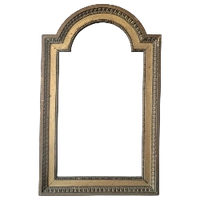
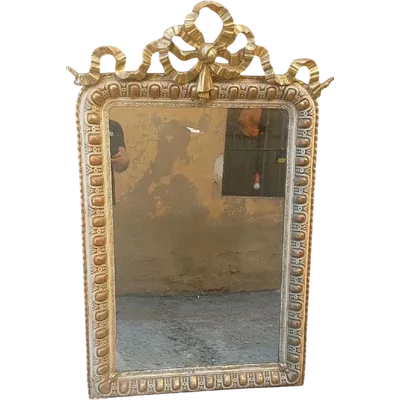
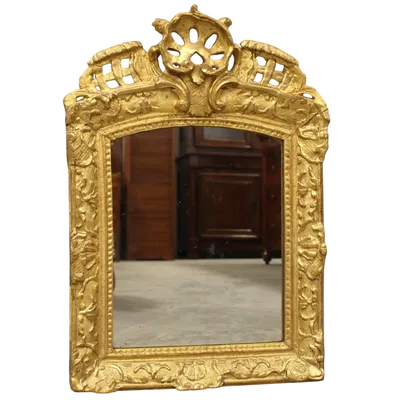
Mirror frames with a crest have a decorated upper section, often with vegetal motifs, cartouches, shells or heraldic elements. In more architectural examples, the frame may recall columns, pilasters or pediments. More sober mirrors, instead, rely on the profile of the frame, the quality of the wood or the finish of the gilded surface.
There are also large wall mirrors, suitable for halls and reception rooms, and smaller models intended for bedrooms, studies or intimate sitting rooms. Scale is an important criterion: an antique mirror should not be assessed only as an isolated object, but also in relation to the wall, ceiling height and viewing distance.
Recognizable styles and forms
In the 17th century, mirrors often became highly theatrical, with rich frames and a strong decorative presence. The Louis XIV Baroque style favours symmetry, grandeur, important gilding and vigorous ornamental motifs.
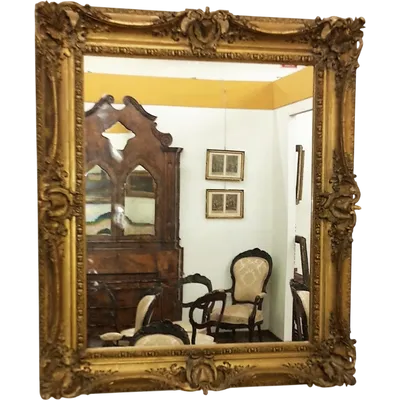
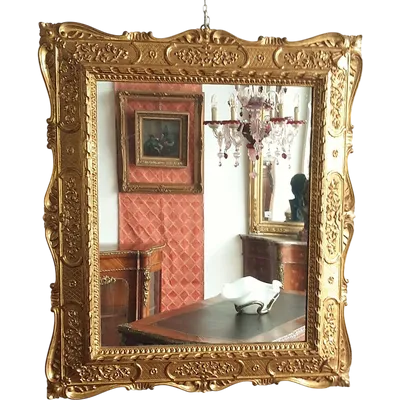
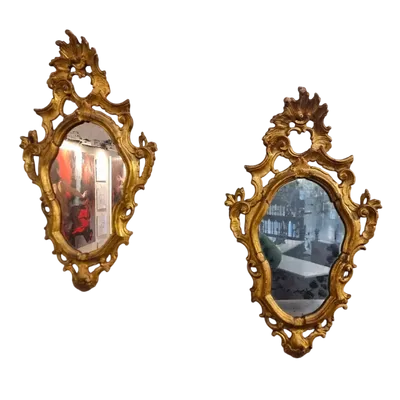
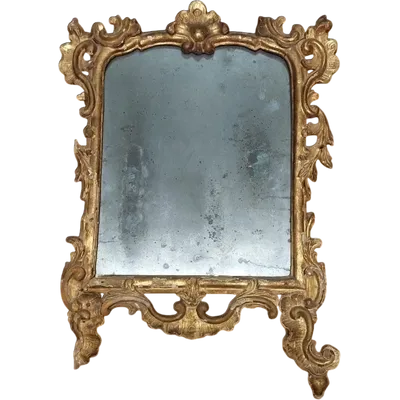
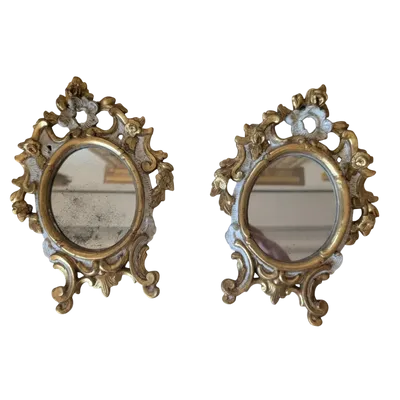
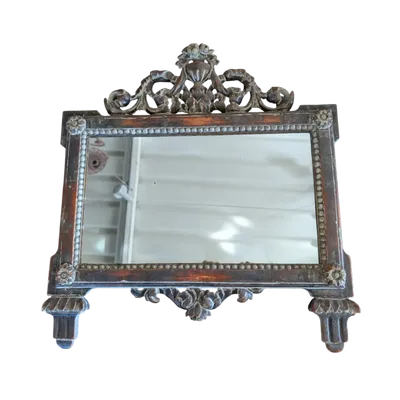
In the 18th century, forms became lighter. Louis XV Rococo mirror frames often show flowing profiles, controlled asymmetry, shells, scrolls and floral motifs. With Louis XVI, more ordered lines return: garlands, ribbons, beading, ovals and classical references.
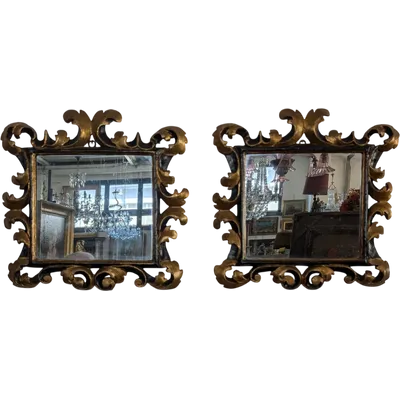
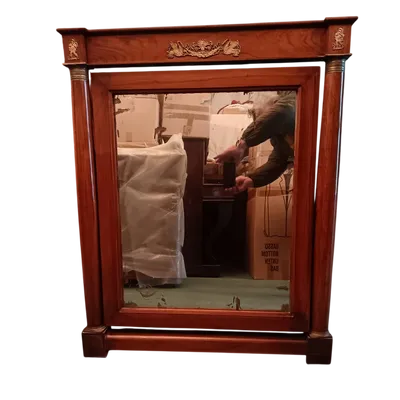
In the 19th century, forms became more varied. The Empire and Consulate style often uses eagles, palmettes, columns, gilded finishes and more severe surfaces. Napoleon III Second Empire mirrors can be more eclectic, with black frames, gilding, inlays or references to earlier styles. In the 20th century, the lines of Art Nouveau and Art Deco introduced more graphic profiles, stylized floral motifs or sharp geometries.
Typical materials and surfaces
Most high-quality antique mirrors have a wooden structure, often carved and prepared with layers of gesso or bole before gilding. The gilding may be gold leaf, imitation gilding or a more economical finish, depending on the period and quality of the object.
The wood may be left visible, lacquered, ebonized or gilded. Antique gilded surfaces are never perfectly uniform: they show slight variations in tone, abrasions on raised areas, small losses and more matte zones. A surface that is too bright and continuous may indicate recent regilding.
The reflective glass is a delicate point. Older mirrors may show oxidation, small dark spots, halos, distortions or a less perfect reflection than modern glass. When coherent with the object, these signs contribute to its historical reading.
The glass: mirror plate, silvering and replacements
In an antique mirror, it is important to distinguish between the frame and the mirror plate. An 18th-century frame may contain glass replaced in the 19th or 20th century; this does not necessarily cancel the value of the object, but it must be considered in the assessment.
Older mirror plates often have irregular thickness, slight waviness or imperfections in the reflection. The back may show oxidation of the silvering, dark areas and small detachments. A modern mirror plate, by contrast, tends to have a colder reflection, a more regular surface and a perfectly uniform back.
Replacement of the mirror glass is common because mirrors are fragile and subject to deterioration. It is important to understand whether the new glass respects the dimensions, proportions and character of the object. A modern plate mounted invasively, with a remade back and inconsistent fittings, is more problematic than a well-executed and declared replacement.
Frame, crest and proportions
The frame is often the most important part of the mirror. It is useful to observe it as one would observe a small architectural structure: base, sides, upper section, inner profile and outer profile. The crest should be coherent in material, carving, patina and fastening.
A crest added later may have different wood, less worn gilding or a mechanical attachment that feels unnatural. Proportions also help: if the upper section appears too heavy, too new or decoratively disconnected from the rest, it may be an addition.
Oval, rectangular, shaped or mixtilinear mirrors have different visual languages. More flowing forms are frequent in Rococo contexts, while straighter and more ordered forms are closer to neoclassical taste. Shape alone, however, does not determine age: construction, materials and execution quality matter just as much.
Gilding, lacquer and decoration
Antique gilding should be observed both from a distance and close up. From a distance, one reads the overall balance; close up, abrasions, cracks, retouching and losses become visible. The most projecting parts, such as leaves, scrolls and edges, are usually more worn because they are more exposed to handling and cleaning.
Lacquers may be monochrome, polychrome or imitate marble, wood grain or oriental-inspired motifs. In some cases, the painted decoration is more important than the carving: an original painted surface, even if worn, can be more interesting than a perfect repainting.
Complete regilding requires caution. A full restoration can make the object more decorative, but it often reduces the historical readability of the surface. Quality also lies in the ability to preserve traces, not only in removing them.
Construction techniques and details to observe
The back tells a great deal. Boards, crosspieces, nails, screws, joints, old holes and mounting systems should all be checked. Forged nails, oxidized wood and handwork may be useful clues, although they are not sufficient on their own to certify age.
Carved parts should be examined in the undercuts and less visible areas: traces of preparation, bole, old gilding or coherent dirt often remain there. Modern retouching tends to focus on the front, leaving readable differences along the edges and on the back.
Structural stability should also be verified. A warped frame, a loose crest or a weakened crosspiece are not only aesthetic defects: they can affect conservation and the safe use of the object.
Patina, wear and typical restorations
The patina of a mirror is not simply dirt, but the combination of oxidation, wear, colour variation and small traces accumulated over time. A good patina is irregular but coherent: it follows points of contact, projecting areas, surfaces exposed to light and those protected from it.
The most common restorations involve gilding, wood consolidation, reintegration of missing elements, replacement of the mirror glass and reconstruction of the back. Not all restorations are negative. A fragile mirror may require conservation work; the problem arises when restoration alters proportions, erases original surfaces or is presented as absent.
Signs to examine carefully include filled cracks, reconstructed leaves or scrolls, colour differences between adjacent parts, very visible modern screws, a completely new back and mirror glass mounted with inconsistent materials.
Geographic origins and regional variants
Mirrors produced in Italy, France and England often show differences in taste and construction. French examples tend to be strongly codified according to court styles, with great attention to symmetry and ornamental quality. Italian examples can vary considerably by region, with more pictorial solutions, lively carving and expressive gilding.
In Venice, the tradition of glass and mirror production played a fundamental role, with refined models sometimes enriched by engraved or applied elements. In Tuscany, Piedmont, Lombardy, Rome, Naples, Sicily and Genoa, local variants may appear in the choice of woods, the design of the carving and the type of gilding.
Geographic attribution requires caution. A “French-style” decorative motif does not necessarily mean French production; it may indicate taste, influence or revival. For this reason, style, materials, technique and documented provenance should be considered together.
How to choose an antique mirror for a contemporary interior
In a contemporary interior, an antique mirror works best when its proportions are respected. Before choosing one, it is useful to measure the wall, ceiling height, furniture beneath it and viewing distance. A mirror that is too small may disappear; one that is too large may become overly theatrical.
The finish is equally important. Antique gilding works well with neutral surfaces, stone, natural wood and restrained walls. A black or ebonized frame may be better suited to minimal interiors, while a lacquered mirror requires attention to the colours already present in the room.
It is also worth considering what the mirror will reflect. A mirror placed opposite a window amplifies light; one placed opposite a visually busy wall amplifies disorder. The object is never neutral: it works with the space, not only on the wall.
Authenticity and value
The value of an antique mirror comes from the balance between age, quality, integrity and decorative presence. A well-carved frame, with readable antique gilding and elegant proportions, may be highly interesting even if the mirror glass has been replaced. Conversely, a very showy but heavily restored mirror may be less significant from an antiques perspective.
Authenticity should be assessed on several levels: frame, surface, mirror plate, back, hardware and restorations. Not everything must always be original, but everything should be coherent and explainable. Quality does not mean perfection: small losses, abrasions and oxidation can be part of the object’s history.
When observing an antique mirror, the most useful question is not only “how old is it?”, but “how many parts tell the same story?”. If structure, materials, patina, style and restorations confirm one another, the object becomes more credible, more readable and generally more interesting in terms of value.
Frequently asked questions
What are antique mirrors and mirror frames?
They are decorative furnishings in which the reflective glass is set within a frame, often made of carved, gilded, lacquered or moulded wood. In antique mirror frames, the frame often has an architectural and decorative role as important as the mirror itself.
What is the difference between a mirror and a mirror frame?
A mirror mainly refers to the reflective glass or to the object as a whole; a mirror frame, in the antiques field, highlights the importance of the surrounding structure, often shaped, carved or gilded.
How can the authenticity of an antique mirror be assessed?
The structure, back, glass mounting system, gilding, patina, nails, joints and coherence between frame and mirror should all be examined. An authentic object usually shows signs of use that are consistent rather than artificially uniform.
Does the mirror glass need to be original?
Original mirror glass can increase the interest of the object, but it is not always essential. In many cases, the antique frame remains the main element of value, provided that any replacement is declared and coherent.
Which materials are most common in antique mirrors and mirror frames?
Common materials include carved wood, gesso, composition ornament, gold leaf gilding, lacquer, silvered or mercury glass. Simpler models may also feature walnut, mahogany, ebonized woods or metal frames.
How can major restorations be recognized?
Look for retouched gilding, reconstructed missing parts, replaced mirror glass, remade backs and structural consolidations. Restoration is not negative in itself, but it should be proportionate and readable.
Which styles are most recognizable in antique mirrors?
Among the most recognizable styles are Baroque, Rococo, Louis XVI, Empire, Napoleon III, Art Nouveau and Art Deco. Each style can be identified through proportions, frame profile, ornamental motifs and the balance between solid and open forms.
Can an antique mirror be used in a contemporary interior?
Yes, provided that its proportions, height and relationship with the wall are considered carefully. A highly decorative frame works best when it is allowed enough visual space, without too many competing elements around it.
What affects the value of an antique mirror?
Value depends on age, quality of carving, condition of the gilding, originality of the glass, provenance, size and rarity of the model. Overall construction quality often matters more than decorative richness alone.