






Antique Chests of Drawers and Dressers
Read the guide
Save search
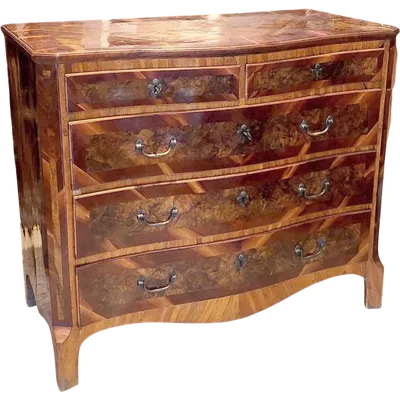
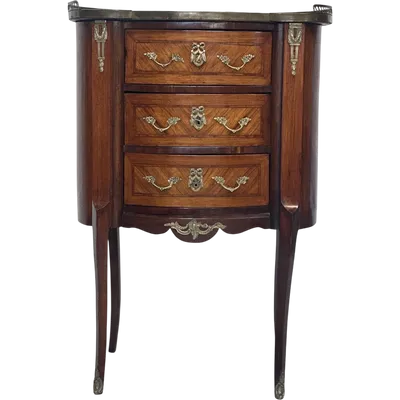
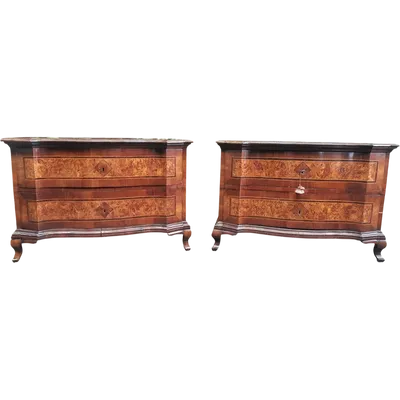
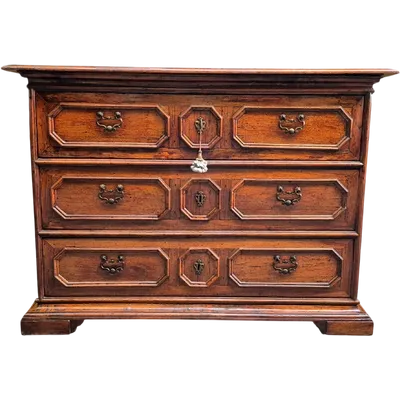
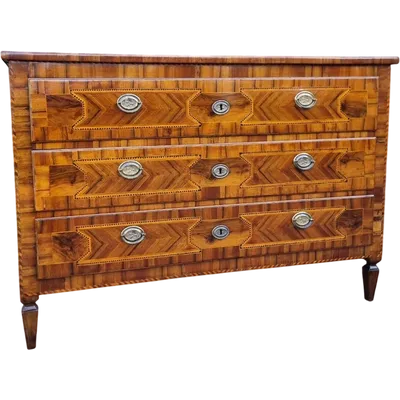
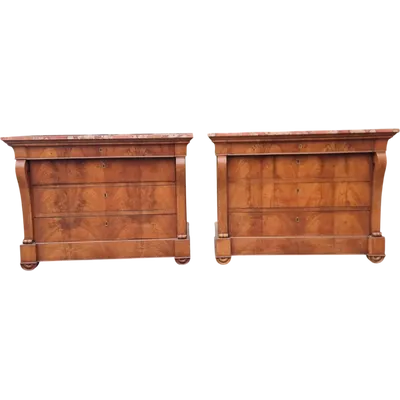
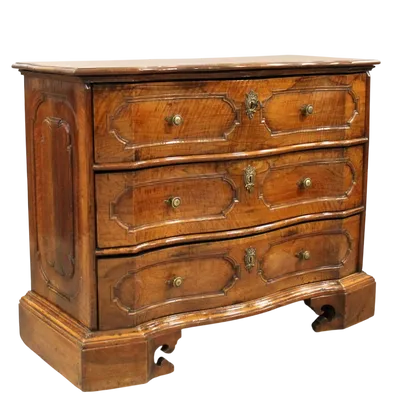
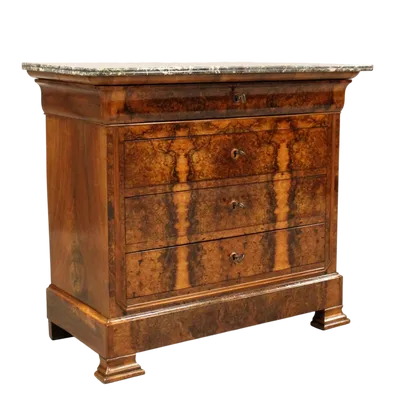
Popular searches
Antique Chests of Drawers and Dressers
Origin and function
The chest of drawers emerged between the late 17th and early 18th century as an evolution of the trunk and the chest. Its function is simple yet revolutionary: to store clothing and objects in an organized way, thanks to stacked drawers accessible from the front.
In Italy and France, the piece quickly became established in aristocratic bedrooms, gradually replacing bulkier and less practical storage solutions. In French, this type of furniture is called commode, meaning “convenient,” in reference to its practical use.
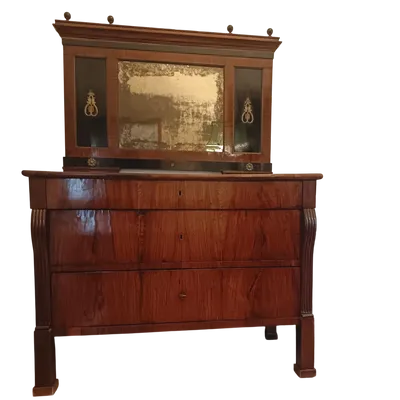
Over time, beyond its practical function, the chest of drawers took on a central decorative role, becoming one of the main furnishing elements in a room, often paired with mirrors or marble tops.
Evolution of styles
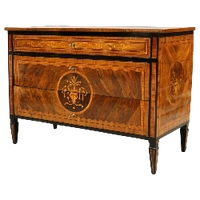
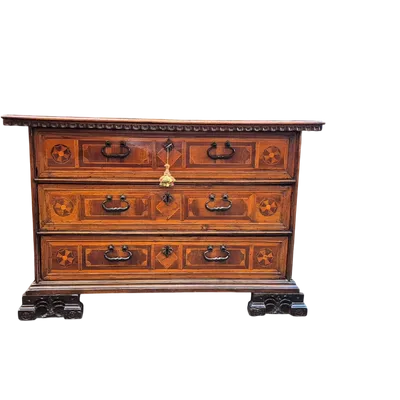
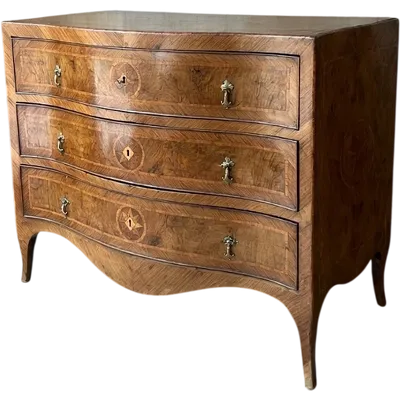
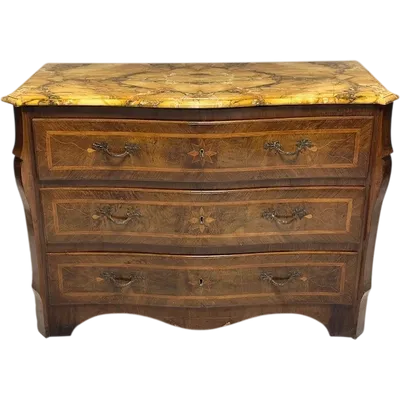
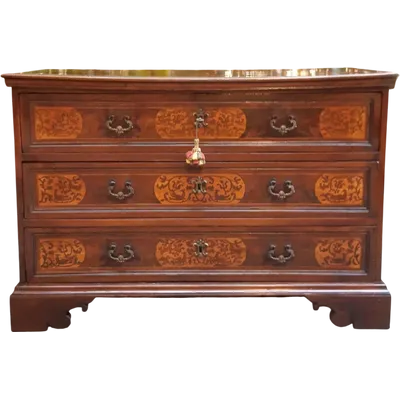
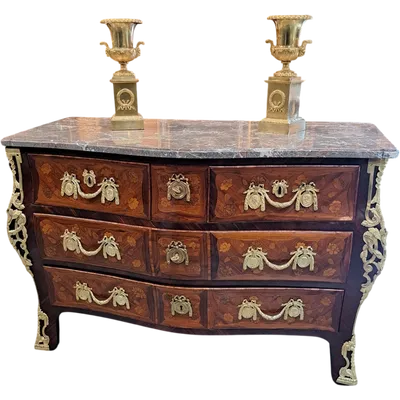
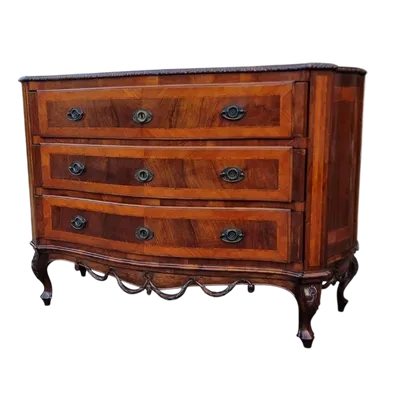
The first major development occurs during the Baroque period (late 17th – early 18th century), with massive chests of drawers, shaped fronts, and rich decoration. In Italy, particularly in Lombardy and Veneto, one finds examples with pronounced curves and elaborate marquetry.
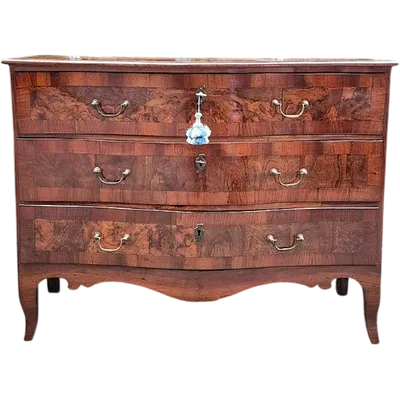
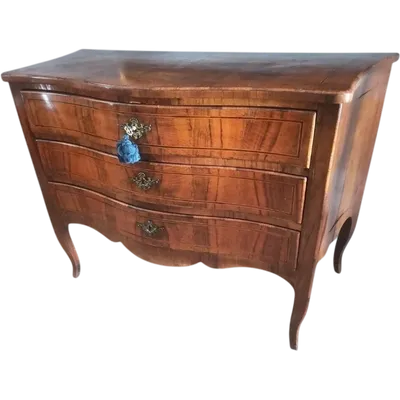
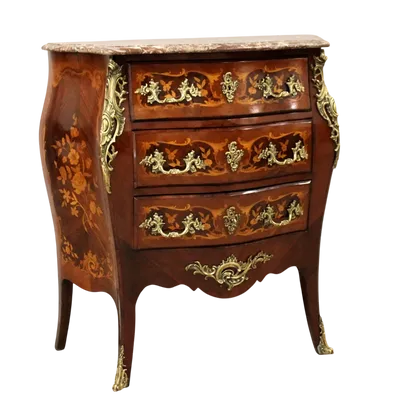
In the 18th century, the piece becomes lighter. With the Rococo style, lines become more sinuous, profiles more curved, and proportions more elegant. In France, iconic models with two or three drawers and lightly defined legs appear, while in Italy regional variations develop with clearly recognizable local characteristics.
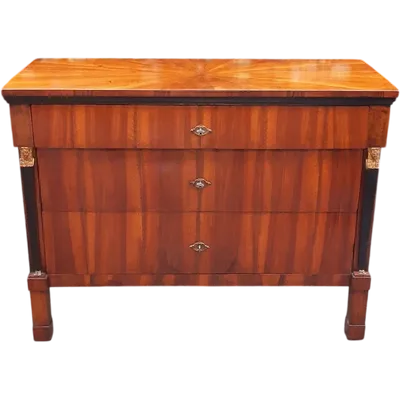
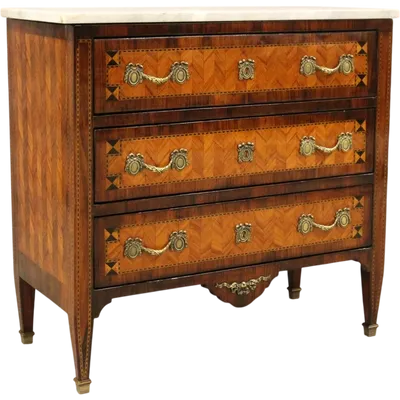
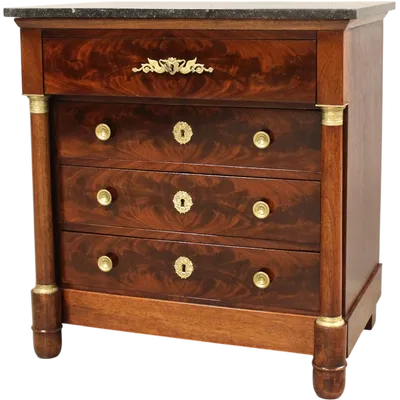
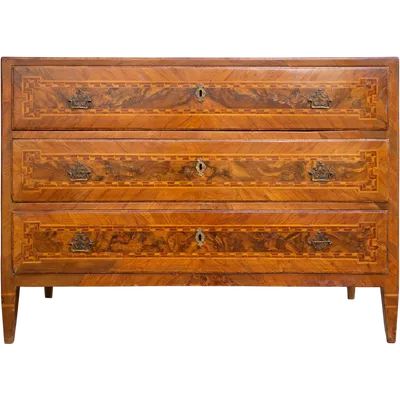
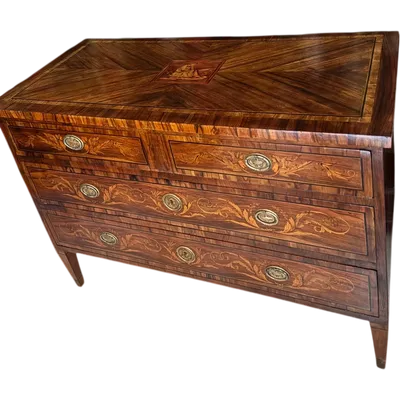
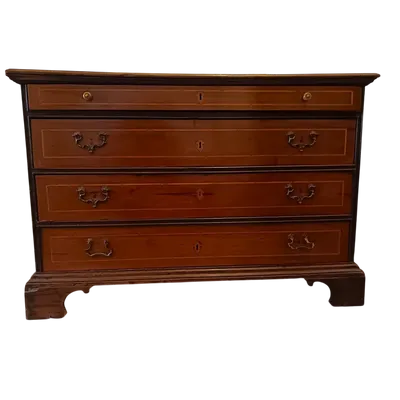
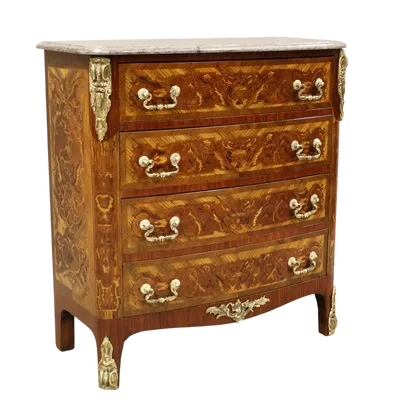
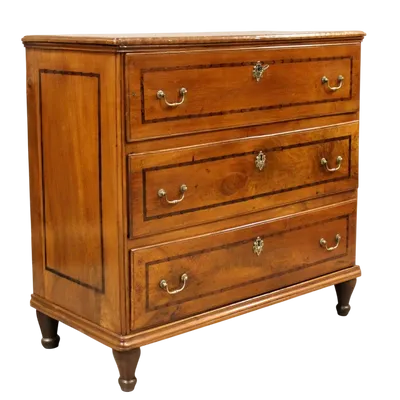
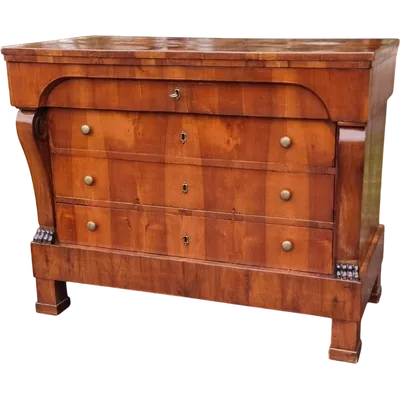
With Neoclassicism (late 18th century), the language changes completely: forms become straighter, decoration more restrained and inspired by antiquity. Chests of drawers become more geometric, often featuring linear inlays, a more controlled use of marquetry, and lateral columns in Empire models.
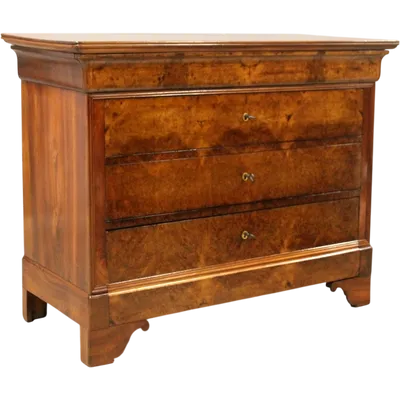
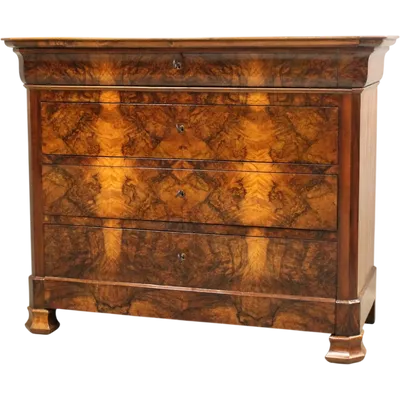
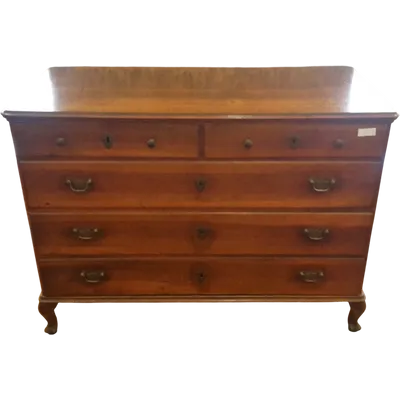
In the 19th century, production becomes broader and more diversified. Alongside high-quality pieces, more serially produced examples appear, with simplified techniques and less carefully selected materials. This is an important shift when evaluating authenticity and value today.
Distinctive elements
The chest of drawers is first recognized by its structure: a horizontally developed rectangular body, with two or three main drawers.
The front is often the most distinctive element. It may be:
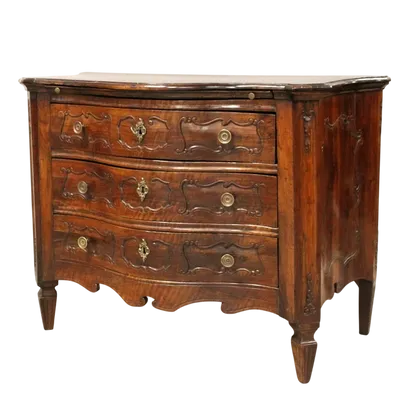
- broken or shaped, with curves and counter-curves, more common in the Baroque
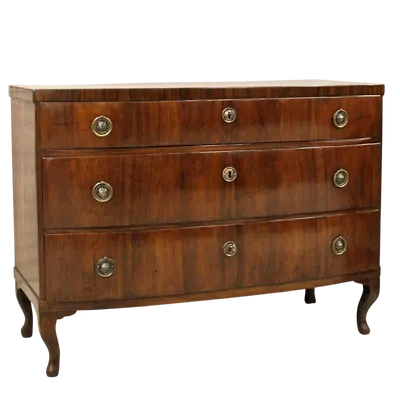
- curved or bombé, frequent in both Baroque and Rococo
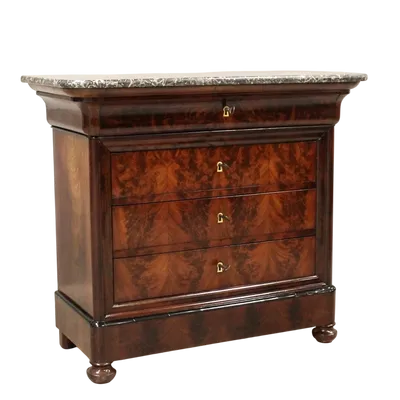
- linear in Neoclassical models, typically with lateral columns in Empire pieces
The top surface also plays an important role. In earlier models it is made of wood, while from the later 18th century marble tops become increasingly common, both for protection and aesthetic value.
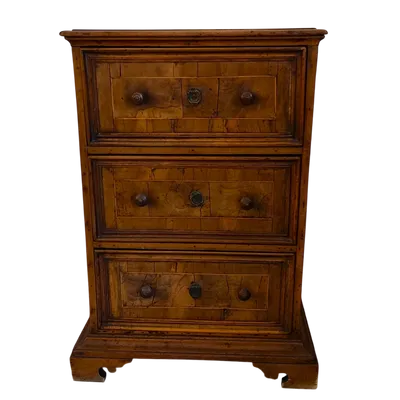
The feet vary considerably: they may be bracket-shaped, scroll-shaped, saber-shaped, or barely defined. In earlier chests, they are often integrated into the structure rather than applied separately.
Finally, hardware and handles – in bronze, brass, or iron – contribute to the identity of the piece. Their form and quality are often consistent with the style and period.
In earlier chests of drawers, hardware is generally simpler and more functional: iron or bronze handles, often with essential, minimally decorative forms. Over the course of the 18th century, especially under French influence, these elements become increasingly elaborate and decorative, with gilt bronze mounts, shaped forms, and ornamental motifs that interact with the overall design of the piece.
In later productions or reproductions, hardware tends to be more standardized and uniform, often less integrated into the overall design and recognizable by a more regular, industrial finish.
Materials and main techniques
The structure of chests of drawers is almost always made from more common and durable woods – such as poplar, fir, or chestnut – chosen for stability. The visible parts, however, are covered with finer woods that define the final appearance of the piece.
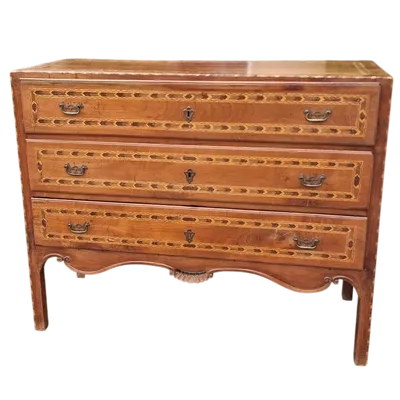
In Italy, between the 17th and 18th centuries, solid walnut is widely used, especially in central and northern regions. Walnut is often left visible or enhanced with subtle inlays and stringing. In Veneto and Lombardy, one also finds pieces with burr woods and decorative veneers, sometimes highly decorative.
In France, during the same period, a more decorative tradition develops: exotic woods (such as rosewood, bois de rose, and amaranth) are used in veneer, often arranged in complex geometric or floral patterns.
With Neoclassicism, both in Italy and France, there is a move toward greater restraint: surfaces become more regular, with linear veneers, fine stringing, and a more controlled use of contrasting woods.
From a construction standpoint, earlier chests of drawers clearly show artisanal workmanship:
- robust structures, though not perfectly symmetrical
- drawers assembled with irregular hand-cut dovetail joints
- bottoms and backs made of joined boards rather than single panels
- use of hand-forged nails, with large, slightly irregular, often visible heads
These nails are a distinctive feature: their heads are typically larger, not perfectly circular, and slightly flattened, reflecting manual production.
By the 19th century, with broader production, construction becomes progressively more standardized:
- nails become smaller, more regular, and uniform, with perfectly consistent heads
- joints become more uniform and sometimes simplified
- increasing use of thin veneers over less valuable structural woods
In reproductions and more recent furniture, these traits become even more evident: surfaces appear overly uniform and lack irregularities, joints are very precise, and the construction is cleaner but less expressive.
Recognizing an authentic antique chest of drawers
As with other antique furniture, assessing authenticity is based on the principle that materials, hardware, structure, and wear should all tell a consistent story.
An authentic chest of drawers reveals itself through how it has aged over time. Natural wear is never uniform but concentrates in the most used areas: edges, around handles, and along drawer fronts. These marks follow logic and use, rather than appearing random or artificially distributed.
Added to this is the patina – the set of transformations the wood develops over time: subtle variations in color, depth of surface, and a kind of visual softness that is very difficult to reproduce convincingly.
Small irregularities are also a good sign. In antique furniture, one often finds slight asymmetries, minor differences between one side and the other, traces of manual workmanship, and quite often wormholes. When authentic, these holes appear irregularly distributed, with varying depth and direction. In artificially aged furniture, by contrast, they tend to be too uniform, repetitive, or arranged in an unconvincing way.
When everything appears too uniform – perfectly even surfaces, overly glossy finishes, extremely precise decoration – it is reasonable to have doubts. These are often signs of invasive restoration or more recent production, where manual workmanship has been replaced by more controlled processes.
For this reason, it is always useful to look where one normally wouldn’t: inside the drawers, underneath, or at the back. These are less visible and less refined areas, but precisely for that reason they are more honest. It is there that the piece preserves its history most clearly, and where it becomes hardest to convincingly “fake” age.