
Antique Wardrobes
Read the guideSave search
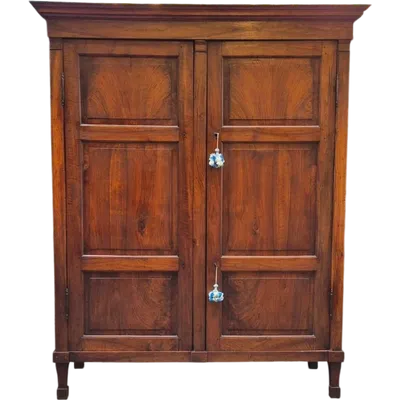
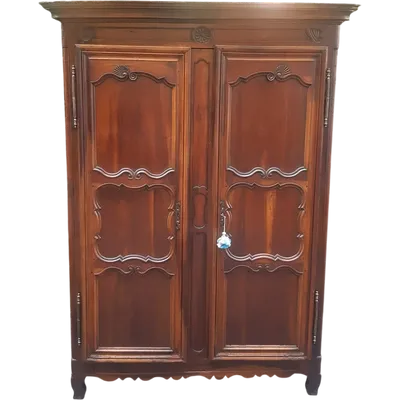
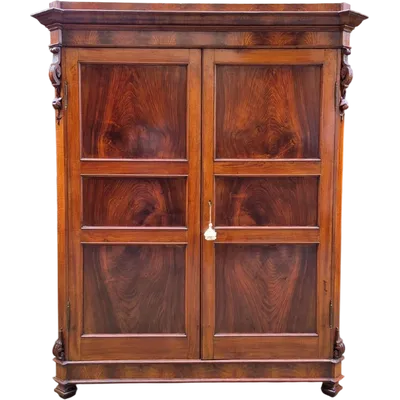
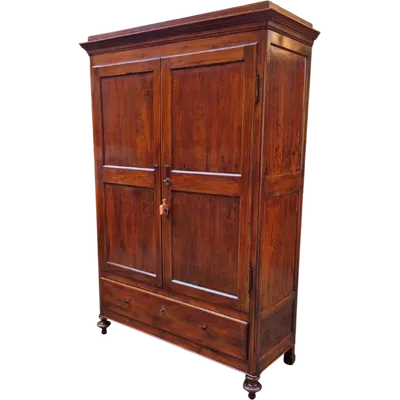
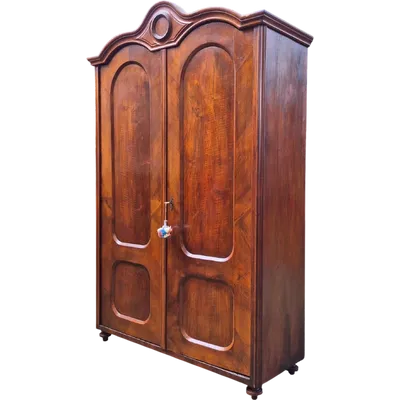
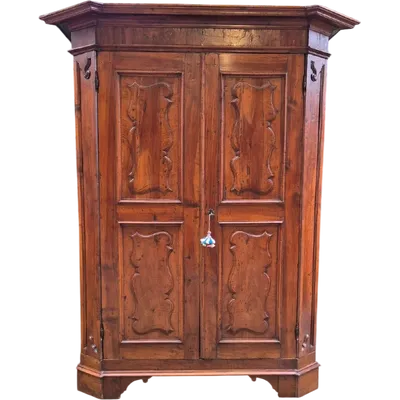
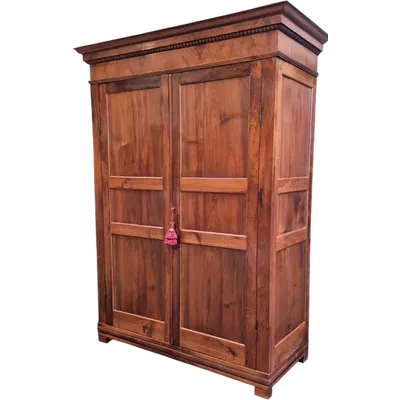
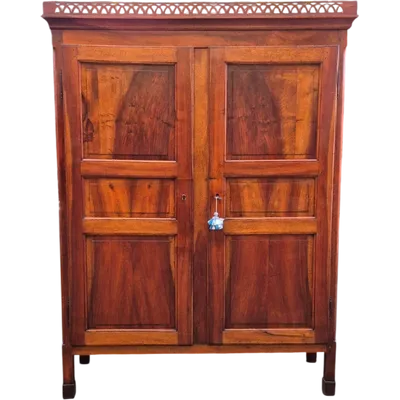
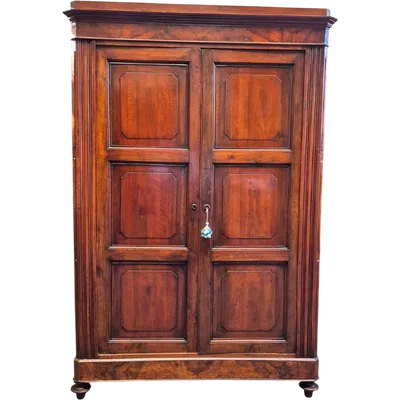
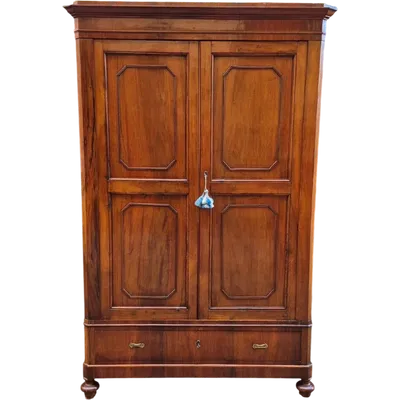
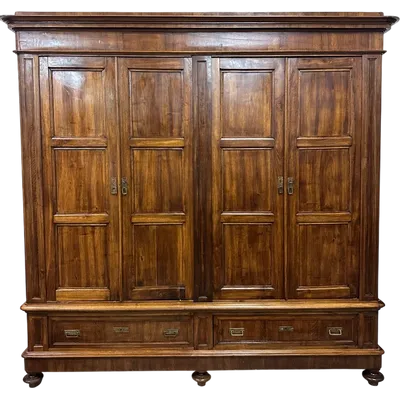
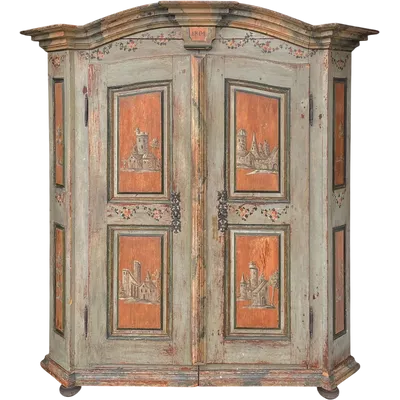
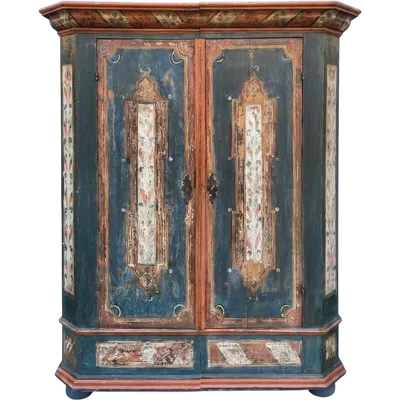
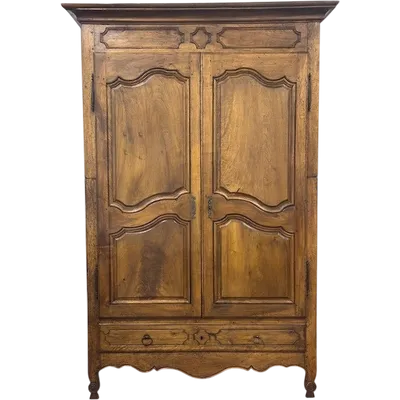
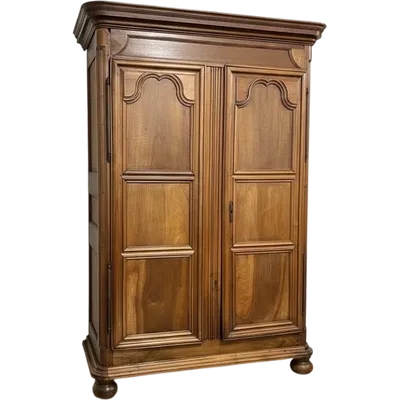
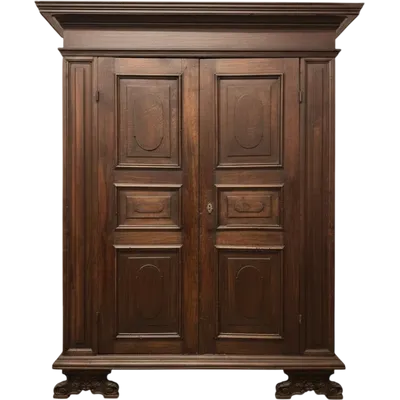
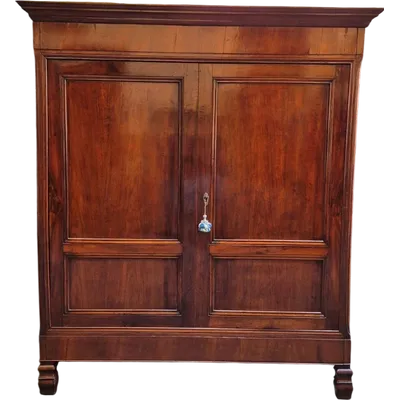
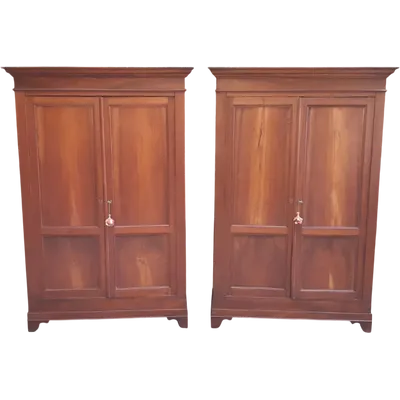
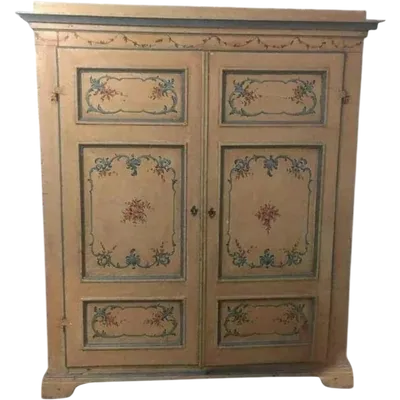
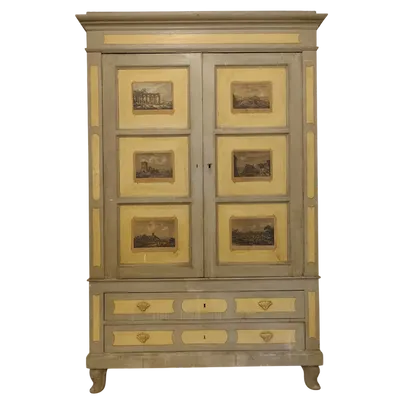
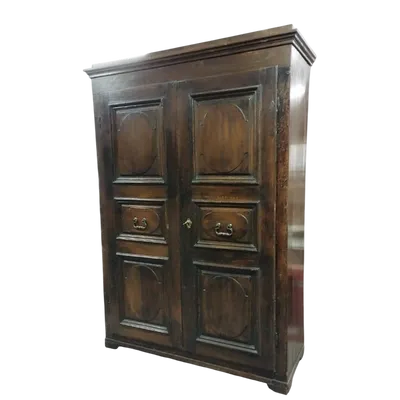
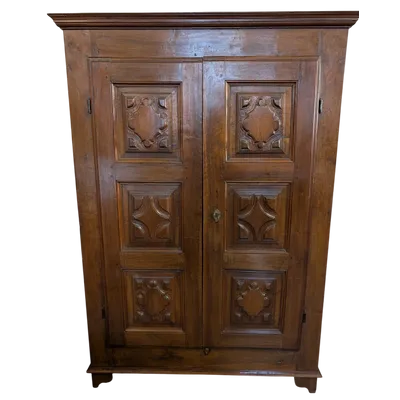
Antique Wardrobes
Origin and function of wardrobes
The wardrobe was born as a piece of furniture intended for storage.
Before wardrobes became widespread in the form we know today, many objects were kept in chests, trunks, boxes and horizontal containers. Over time, the need to organize clothes, linen, documents and domestic objects in a more practical way led to the development of vertical pieces of furniture, more capacious and better suited to making use of wall height.
The wardrobe thus became one of the most important pieces of furniture in the home. It does not merely contain: it organizes space, protects what it holds and often communicates the social level of the family or the interior in which it is placed.
In a bedroom it may store clothes and linen. In a hall or corridor it may contain domestic objects, textiles or services. In a study it may store documents or books. In a sacristy it may be intended for vestments, liturgical furnishings and religious objects.
Unlike smaller and easily movable pieces, the wardrobe often has an architectural presence. It occupies a wall, defines the room and dialogues with doors, boiserie, windows and floors. For this reason, in the most important models, its form is not only functional, but also representative.
The main types of antique wardrobes
Antique wardrobes can take very different forms depending on function, period and provenance.
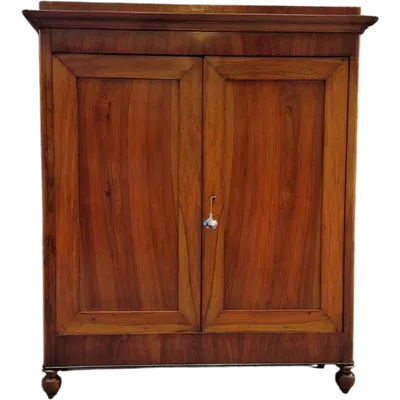
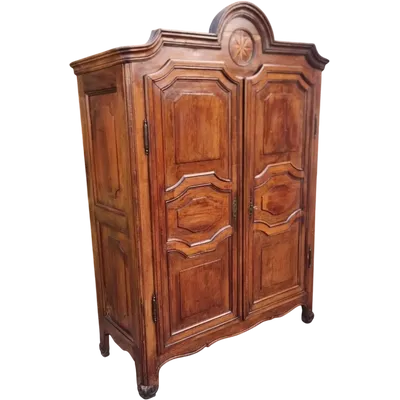
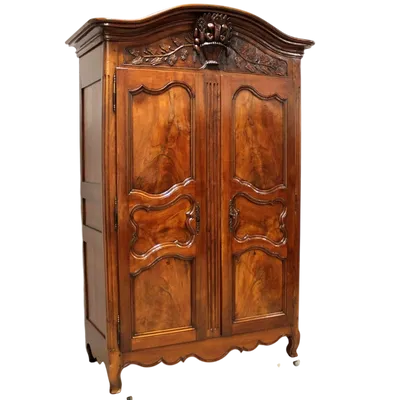
The two-door wardrobe is probably the most common type. It may be simple and linear, or enriched with cornices, panels, carvings, shaped cresting and decorative feet. It is a balanced and practical form, suitable both for the bedroom and for other domestic spaces.
One-door wardrobes are often narrower and suited to smaller spaces. They may be used for linen, documents, personal objects or small wardrobes. In some cases they have a tall and slender structure, while in others they are lower and more compact.
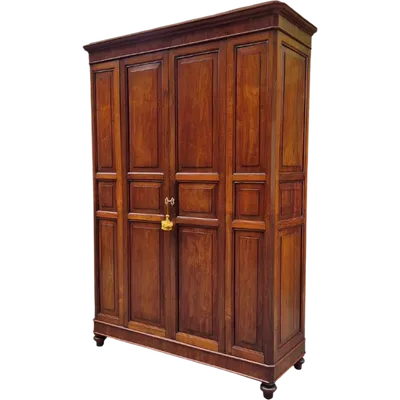
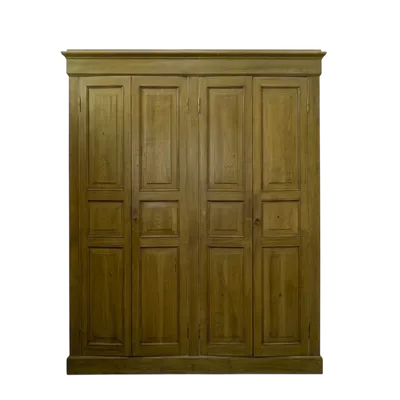
Multi-door or large wardrobes are more demanding pieces. They may have been made for large rooms, important residences, sacristies, libraries or professional contexts. They are often composed of several bodies or distinct sections, and may include drawers, shelves, internal compartments or separate upper parts.
Clothes wardrobes are designed for garments and accessories. They may have hanging rails, shelves, internal drawers or mirrors. Some examples were originally made for this function, while others were adapted over time.
Linen cupboards are generally organized with internal shelves. They are often deeper and designed for folded textiles, sheets, tablecloths and household linen.
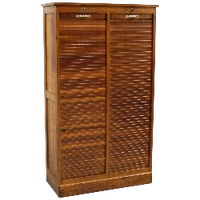
There are also sacristy wardrobes, bookcase wardrobes, office cupboards and more specific storage pieces. In these cases, the original function can be very important for understanding structure, dimensions and internal organization.
Styles and most recognizable forms
The wardrobe follows the taste of the furniture of its own period, but it does so with particular strength, because it is a large piece.
In the Baroque period, wardrobes can have an imposing presence: marked cornices, shaped cresting, carved panels, pilasters, sturdy feet and full volumes. These are pieces designed to dominate the space and communicate solidity.
In the Louis XV and Rococo taste, forms become lighter. Lines may become more fluid, cornices softer, and corners less rigid. In some cases, shaped panels, floral carvings or more elegant and flowing decorations appear.
With Louis XVI and Neoclassicism, the wardrobe returns to more ordered and geometric forms. Doors are organized into regular panels, cornices become more linear, and decoration is inspired by classical antiquity: rosettes, garlands, columns, fluting, stringing and measured proportions.
The Empire style introduces a more severe and monumental character. Wardrobes may feature straight lines, compact volumes, side columns, bronzes, dark woods and symbolic decorations. It is a more architectural taste, less frivolous and more solemn.
In the nineteenth century, the panorama expands. Wardrobes in Louis Philippe, Restoration, Neo-Renaissance, Neo-Gothic or Eclectic style become widespread. Some are refined and well built, others more bourgeois and serial. It is a period in which production increases and furniture enters homes more broadly.
Between the late nineteenth and early twentieth centuries, Art Nouveau wardrobes may present more sinuous lines, vegetal motifs, mirrors, floral carvings and lighter proportions. In early twentieth-century and modernist models, instead, decoration may be reduced in favor of simpler, more functional and geometric surfaces.
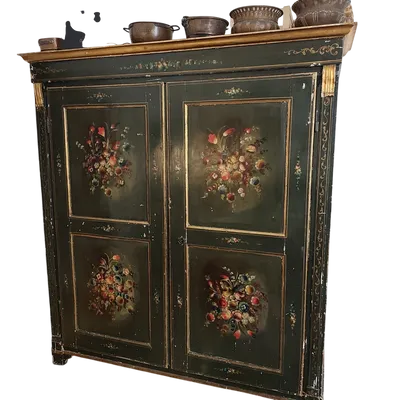
Alongside the most recognizable styles there is a large tradition of rustic, regional and provincial wardrobes. They are often less decorative, but very interesting for their materials, proportions, domestic function and relationship with the territory.
Materials and surfaces
The main material of antique wardrobes is wood, but the choice of wood species varies greatly according to period, geographical area and quality level.
Walnut is one of the most important woods in Italian wardrobes. It has a warm and solid presence, and lends itself both to sober surfaces and to more refined cornices, panels and carvings. It is frequent in good-quality furniture, especially between the seventeenth, eighteenth and nineteenth centuries.
Oak is widely used in various European areas, especially in French, English, Nordic and Central European furniture. It is a robust, resistant wood, with a visible grain and strong material presence.
Chestnut and cherry often appear in regional, rustic or provincial wardrobes. They are woods linked to the territory, appreciated for their resistance, warm color and local availability.
Fir and pine are frequent in internal structures, painted furniture or wardrobes for everyday use. They may be simpler, but not necessarily without interest, especially when they preserve a good patina or an original painted finish.
Mahogany appears in more elegant wardrobes, often from the nineteenth century or of English influence. It has a more uniform and deep surface, suitable for refined furniture and bourgeois or representative interiors.
In richer models there may be veneers, burr woods, stringing, inlays, lacquered finishes, mirrors, glass, bronzes, locks and decorative hardware. A veneered surface is not automatically less valuable than solid wood: in many high-quality antique pieces, veneer was a refined technique used to obtain decorative effects impossible with solid wood alone.
Construction techniques and details to observe
To evaluate an antique wardrobe, it is essential to observe not only the front, but also the structure.
The back is one of the most revealing elements. In antique furniture it may be made of vertical or horizontal boards, with thicknesses that are not always uniform. It may show plane marks, nails, joints, old holes, traces of fixings or restorations. A back that is too new or too regular may indicate a replacement.
The bottom and the upper section also deserve attention. The quality of the boards, the way they are assembled, possible deformations and color differences can say a great deal about the history of the piece.
The doors are fundamental. It is important to observe whether they open correctly, whether they are stable, whether they have suffered deformation, whether the hinges are coherent and whether the locks are original or replaced. In an antique wardrobe it is normal to find small irregularities, but major closing problems may indicate structural failures.
Cornices, cresting and feet help understand period and style, but also possible modifications. Feet that are too new, reconstructed cornices or incoherent upper sections may suggest later interventions.
The interiors are equally important. Shelves, hanging rails, drawers, dividers and mirrors may be original, added or modified. An internal modification does not always compromise the value of the piece, especially if it makes it usable, but it should be clear and compatible with the structure.
As always, authenticity is not determined by a single detail. What matters is the overall coherence between form, materials, construction, patina, hardware and signs of use.
Patina, wear and restorations
An antique wardrobe, by its nature, is a piece that may have gone through many changes. It may have been moved, dismantled, reassembled, adapted, restored or modified for new uses.
Patina is therefore an important element to observe. Surfaces should not all appear identical and perfectly uniform. Areas more exposed to light, contact and cleaning may differ from internal, lateral or hidden areas.
Natural wear is often concentrated around handles, locks, edges, feet and door rebates. The interior may also show traces of use: marks on shelves, color variations, small scratches, areas smoothed by contact with fabrics or objects.
The most common restorations concern hinges, locks, feet, cornices, backs, shelves, bottoms or structural parts. In very large wardrobes, it may have been necessary to reinforce the structure or make the piece dismantlable for practical reasons.
A conservative restoration can be positive, because it allows the piece to be stable and usable. It becomes more problematic when it erases the history of the object: overly repolished surfaces, parts replaced without coherence, undeclared modern hardware, artificial patinas or heavy modifications to the internal organization.
An antique wardrobe should not look new. It should look sound, coherent and legible.
Italian, French and regional wardrobes
Italian wardrobes show great variety, because each area developed its own traditions.
In many Italian regions, walnut played a central role. One finds sober and well-proportioned wardrobes, but also examples rich in cornices, carvings, panels and shaped cresting. Tuscan, Lombard, Venetian, Piedmontese, Ligurian or Emilian wardrobes can differ greatly in structure, materials and decoration.
French wardrobes often show strong stylistic coherence. In Louis XV models, one finds more flowing lines, shaped panels and a certain decorative elegance. In Louis XVI and Empire models, instead, symmetry, proportion, straight lines and classical or architectural motifs prevail.
English and Nordic wardrobes may show a more functional character, with great attention to construction, solidity and internal organization. In many cases the piece is less scenic, but very balanced.
Rustic or provincial wardrobes, whether Italian or European, deserve separate consideration. They may be simpler in materials and forms, but very authentic in their relationship with daily life, territory and original function. A well-preserved rustic wardrobe, with good patina and harmonious proportions, can be very interesting even without elaborate decoration.
Choosing an antique wardrobe for a contemporary interior
An antique wardrobe can be one of the most difficult but also one of the most interesting pieces to place in a contemporary home.
The main difficulty is scale. A wardrobe has a strong visual presence: it occupies a wall, develops in height and can completely change the perception of a room. For this reason it must be chosen carefully, evaluating proportions, light, wood color and relationship with the other furnishings.
A dark walnut wardrobe can be very elegant, but in a small and poorly lit room it may feel heavy. A lacquered, painted or lighter-wood wardrobe can instead lighten the environment. A highly decorated model requires visual space, while a simpler wardrobe can integrate more naturally.
From a functional point of view, it is important to understand how it will be used. For hanging clothes, sufficient depth and a suitable internal structure are needed. For linen and textiles, shelves are more useful. For books or heavy objects, the strength of the shelves and overall stability must be assessed.
An antique wardrobe can work in a bedroom, entrance hall, corridor, living room or study. It can be used as a clothes wardrobe, linen cupboard, archive cabinet, decorative pantry or scenic element.
The best choice comes from the balance between three aspects: beauty, function and measure.
Authenticity and value
The value of an antique wardrobe depends on many factors: period, construction quality, materials, dimensions, provenance, rarity, state of conservation, proportions and level of restoration.
A very large or decorated wardrobe is not automatically more important. Some simple, well-built examples preserved with coherence can be highly interesting. In the same way, a rich wardrobe that has been heavily modified may lose part of its historical value.
Authenticity must be assessed by observing the whole. A wardrobe may have added shelves, replaced locks or small restorations without losing interest. It becomes more problematic when structural parts, doors, back, feet or cornices have been extensively and undeclaredly replaced.
For the buyer, it is useful to observe the piece as a complex construction: first the general form, then the proportions, then materials and surfaces, then hardware, interiors and hidden parts.
An authentic antique wardrobe does not need to look perfect. It must be stable, coherent and legible in its history. It is precisely this combination of function, presence and memory that makes it one of the most significant pieces of antique furniture.
Frequently asked questions
What is an antique wardrobe?
An antique wardrobe is a large storage piece, generally vertically developed and fitted with one or more doors. It was created to store clothes, household linen, domestic objects or documents, but over time it also took on a decorative and representative role within the home.
What were antique wardrobes used for?
Antique wardrobes were mainly used to store clothes, textiles, linen, personal objects or valuable materials. Depending on the context, they could be found in bedrooms, corridors, sacristies, studies, noble residences or bourgeois homes.
What are the main types of antique wardrobes?
The most common types include one-door, two-door or multi-door wardrobes, clothes wardrobes, linen cupboards, sacristy wardrobes, bookcase wardrobes and models with internal drawers or mirrors. Some examples are very simple and functional, while others have strong decorative value.
Which styles are most common in antique wardrobes?
Antique wardrobes may belong to different styles, including Baroque, Louis XV, Louis XVI, Neoclassical, Empire, Restoration, Louis Philippe, Art Nouveau and rustic or provincial taste. The style can be recognized through proportions, doors, cornices, feet, cresting, panels and hardware.
What materials are found in antique wardrobes?
Antique wardrobes are often made of walnut, oak, chestnut, cherry, fir, pine or mahogany. More refined models may include veneers, burr woods, inlays, lacquered finishes, mirrors, glass, and iron, brass or bronze hardware.
How can you recognize an authentic antique wardrobe?
An authentic wardrobe shows consistency between structure, materials, patina, hardware, construction techniques and signs of age. It is useful to observe the back, bottoms, cornices, hinges, locks, joints and interior parts, which are often more revealing than the front surfaces.
Are antique wardrobes always dismantlable?
Not always. Some antique wardrobes are built in several parts and can be dismantled, while others are assembled more permanently. Before purchasing, it is important to check dimensions, access points, stairs and transport possibilities.
Can an antique wardrobe be adapted for modern use?
Yes, many antique wardrobes can still be used today for clothes, linen, books or domestic objects. Sometimes shelves, hanging rails or small internal adaptations are added, provided the interventions are reversible and respectful of the piece.
Do restorations reduce the value of an antique wardrobe?
Not necessarily. Conservative restorations, structural reinforcements or functional repairs can be normal and useful. Invasive restorations, extensive replacements, excessive repolishing or undeclared modifications can instead reduce the historical interest of the piece.
How should you choose an antique wardrobe?
It is useful to evaluate dimensions, depth, door opening, state of conservation, intended function and coherence with the interior. An antique wardrobe often has a strong visual presence, so proportions and placement within the room are fundamental.