
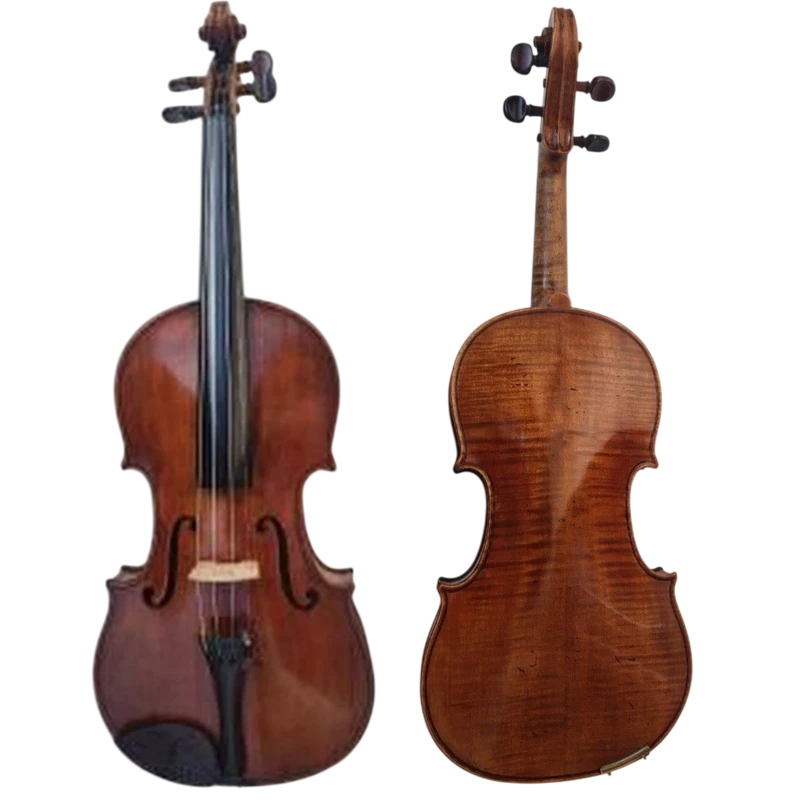
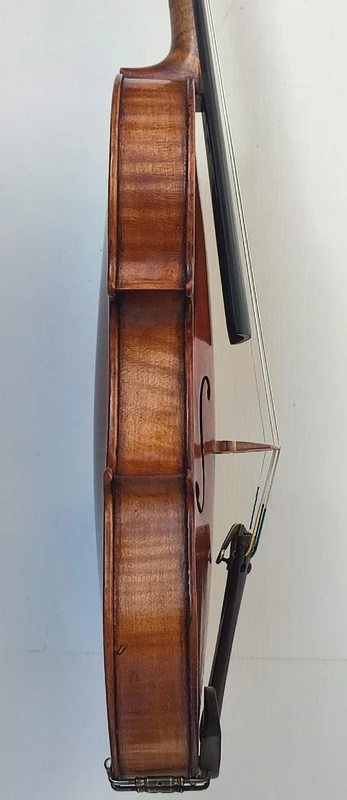
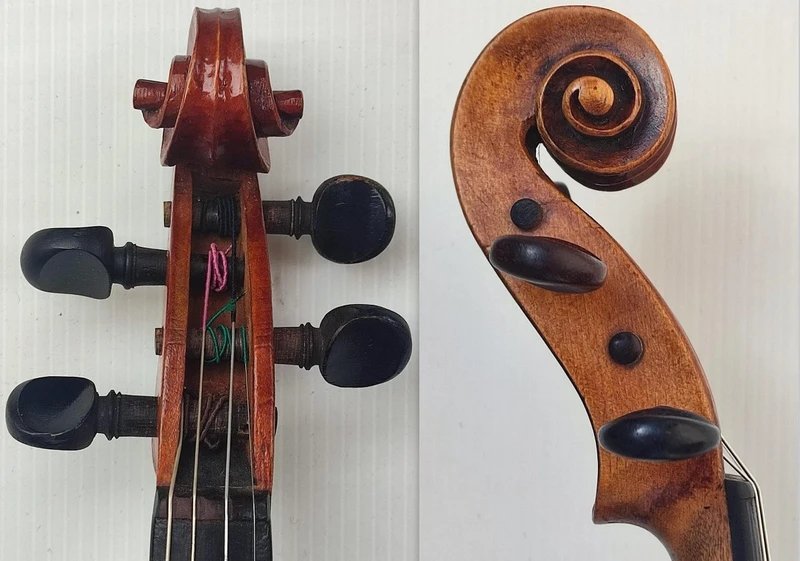
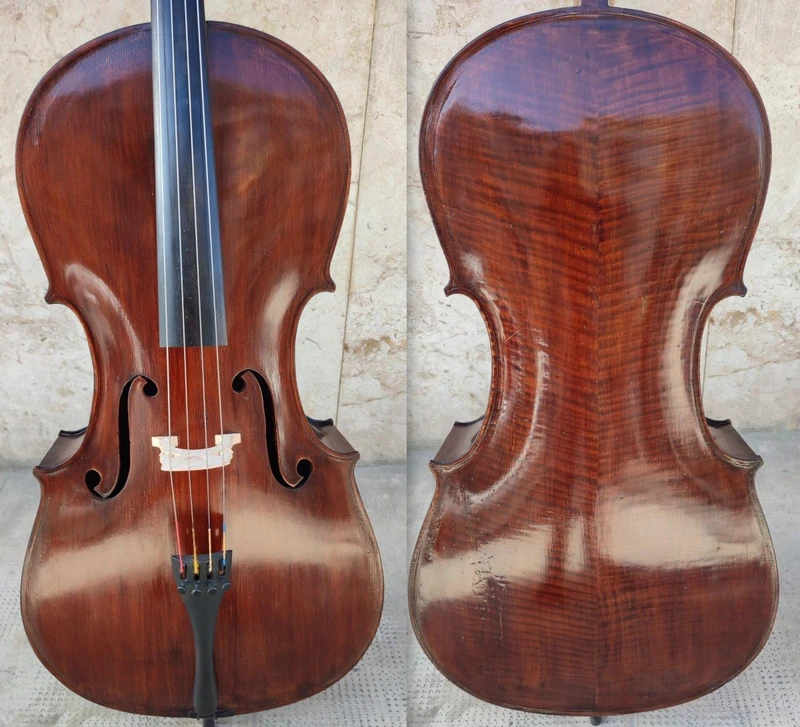
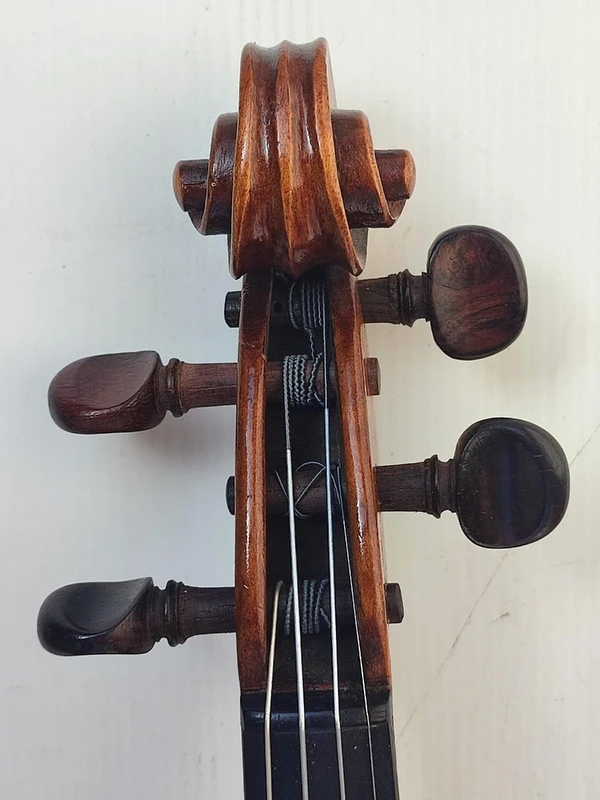
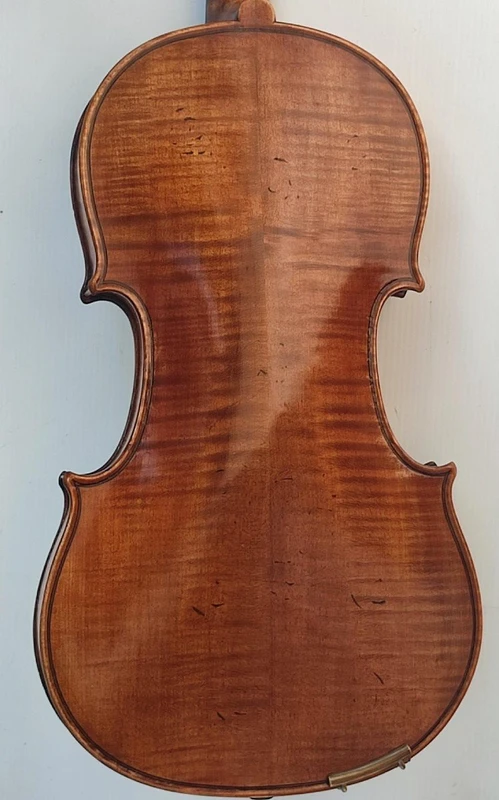
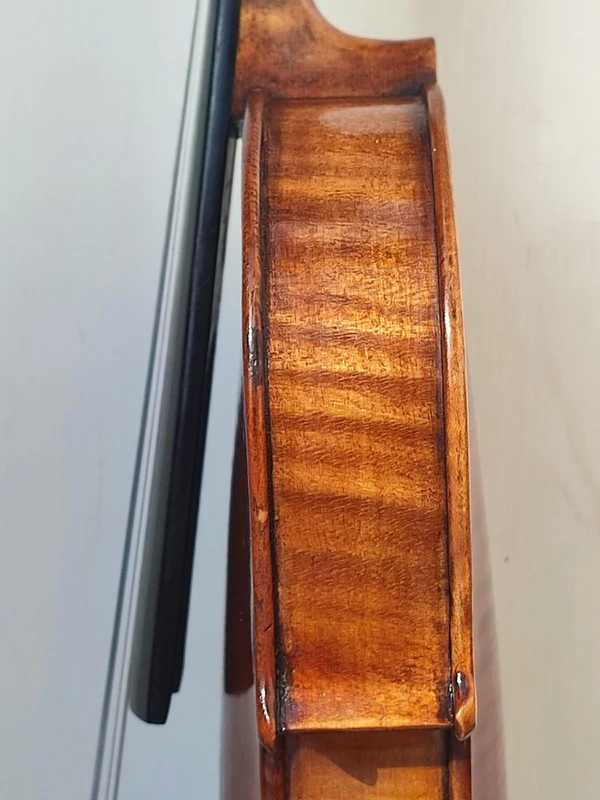
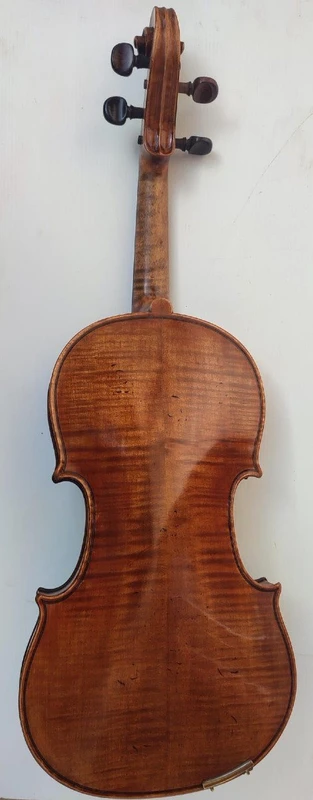
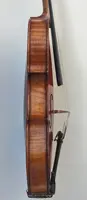
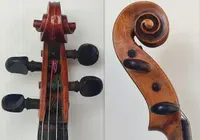
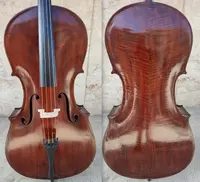
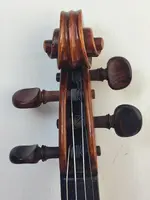
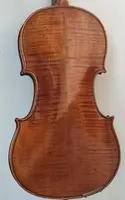
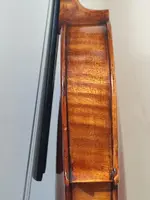
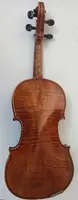
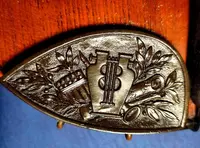
Neapolitan violin by Vincenzo Postiglione (1831–1916), circa 1860
Description and details
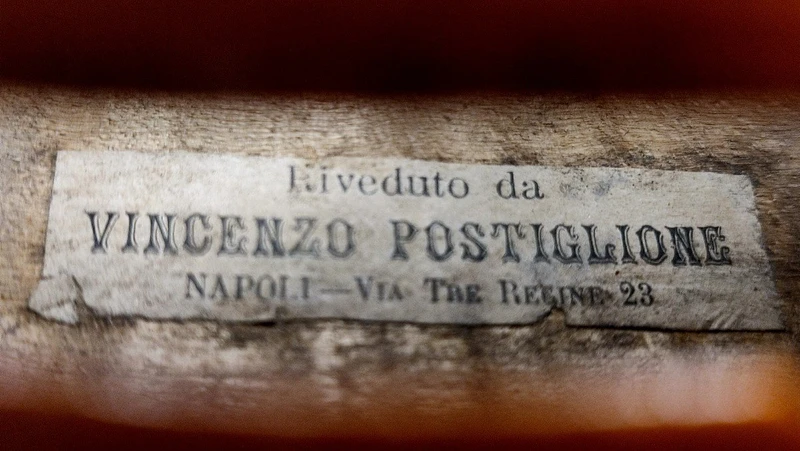
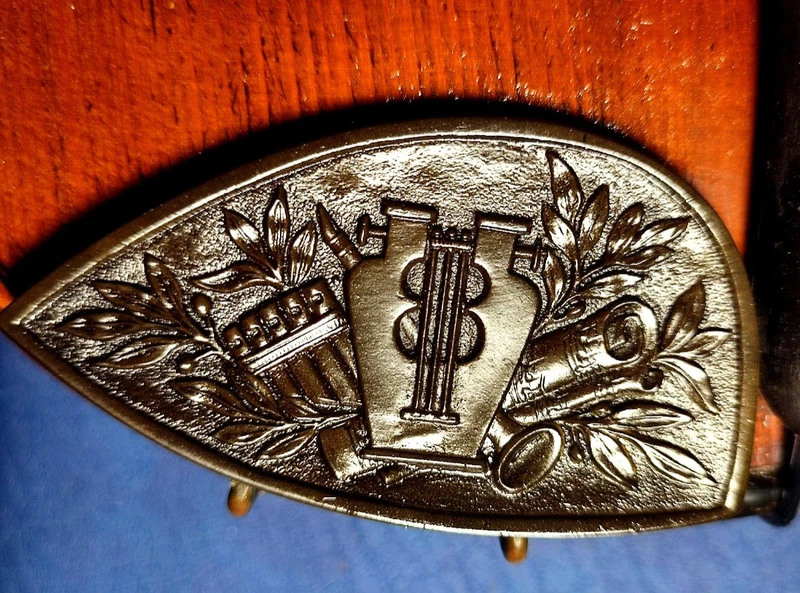
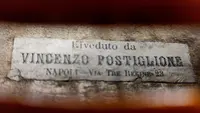
An exquisite Neapolitan violin crafted by the famous luthier Vincenzo Postiglione (1835–1916). It measures 35.8 cm. VINCENZO POSTIGLIONE (1831–1916): He is considered the founder of the 20th-century Neapolitan school of violin making. As a young man, Vincenzo Postiglione studied the works of the great violin makers; at the very young age of 16, he became an apprentice to Vincenzo Jorio. He devoted himself to instrument making, following the models of the classics—such as Stradivari, Guarneri, and Gagliano—with great mastery and a strong personal style. Over 500 instruments bear his name; they are highly sought after for both their craftsmanship and their acoustic qualities—he built mostly violins and cellos, but also violas, double basses, and violas d’amore. His production ranged widely in quality, from beautiful custom-made instruments to instruments with semi-finished bodies (mostly from Czechoslovakia) that were finished and varnished. He often inscribed “The Eye of Providence,” a Masonic symbol, on the label or inside the soundboard. He worked in the Spanish Quarter on Vico Tre Regine. This instrument dates to the luthier’s early period, between 1855 and 1860, both because the year of manufacture is not yet mentioned and to consistently place the “original” chinrest—masterfully carved from ebony— to the period of Napoleon III—specifically between 1850 and 1870. The label “Accomoda da Vincenzo Postiglione” is the early description of the master’s early works. Very captivating sound