
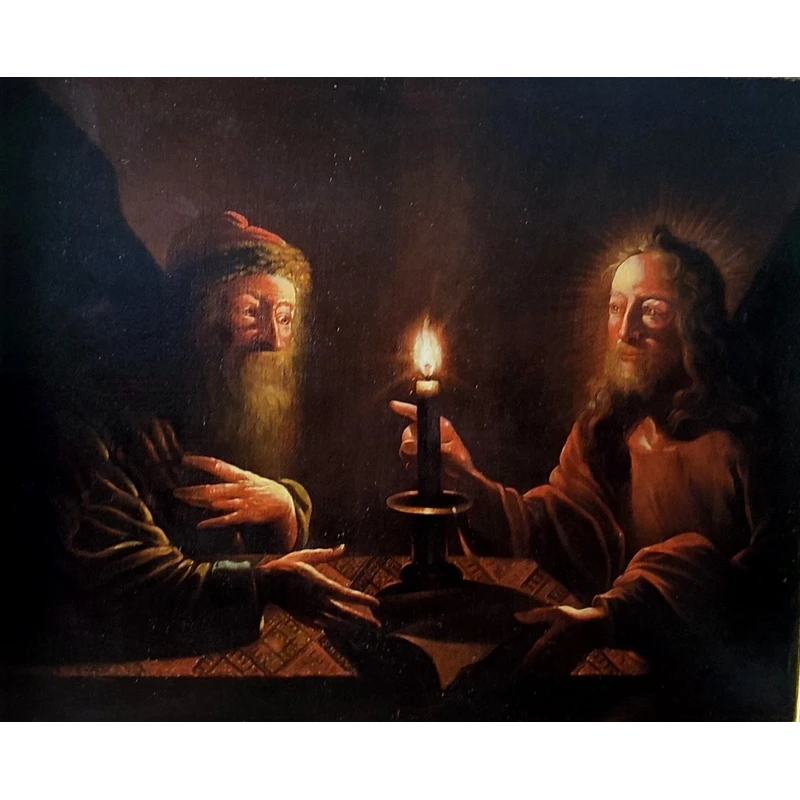
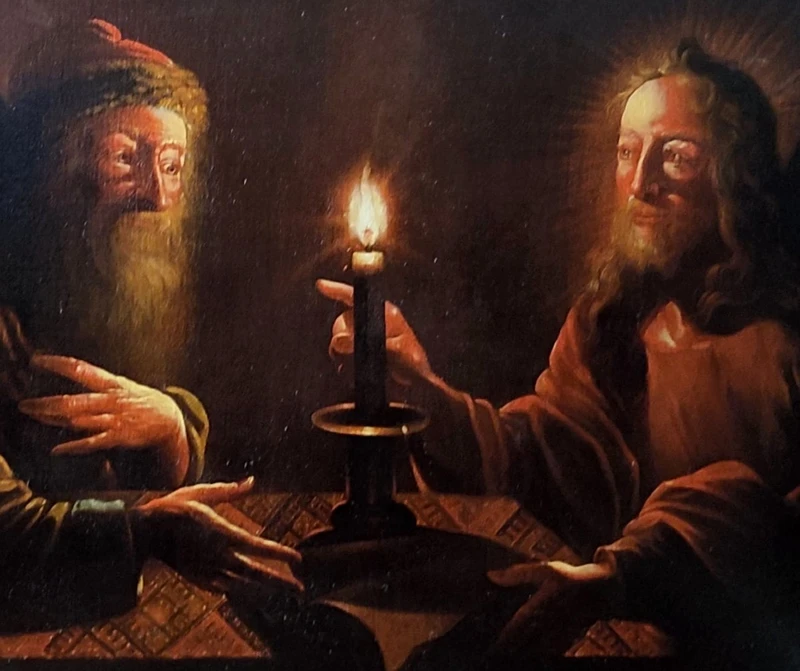
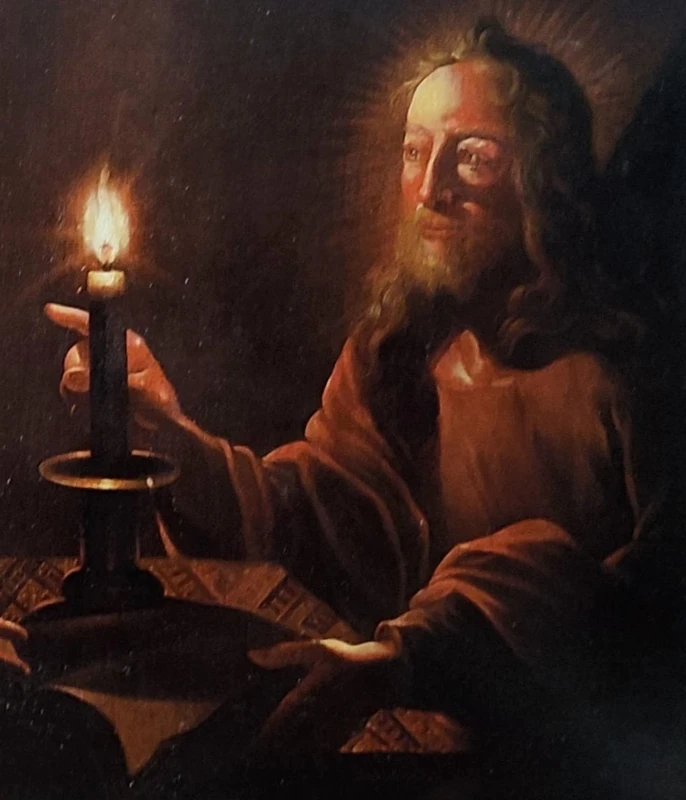
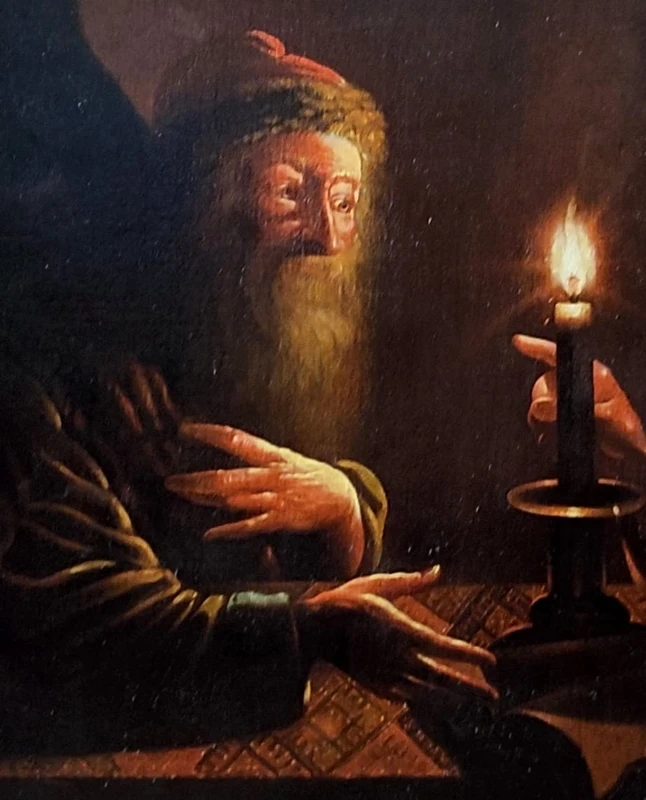
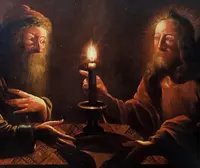
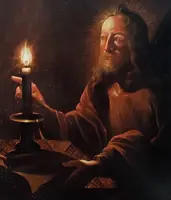
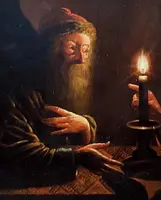
Trophime Bigot - a striking 17th-century painting, “Christ and Nicodemus,” 107x133 cm –
Description and details
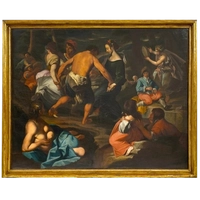
"Christ and Nicodemus": A Caravaggesque scene of remarkable intensity. The light—which, for Caravaggio and his followers, spreads at an angle, casting directional shadows that are both bright and muted— in Bigot’s works, is the candle that casts light from the center of the scene; as the intensity shifts, the atmosphere becomes more concentrated, aggressive, harsh, and compact. Trophime Bigot (Arles 1579–Avignon 1650) was a French painter who worked in Italy between 1620 and 1634, and this painting, which comes from a Roman collection, bears witness to the deep, reverent, and formal debt to Caravaggesque painting—which Bigot certainly had the opportunity to see in Rome—as he interprets and enhances the harshness of his personal vision of nocturnal light diffused by a candle at the center of the scene. A painter whose works are held in approximately 40 international museums, he is, in our view, not fully recognized or appreciated, having been a Caravaggist who transformed and personalized the vision of the Caravaggio school with his own unique—albeit very biting—interpretive style.