






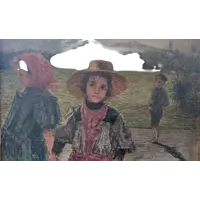
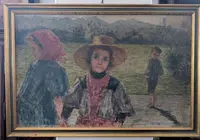
Carla Celesia di Vegliasco (1868–1939) – Figures in a Landscape


Description and details
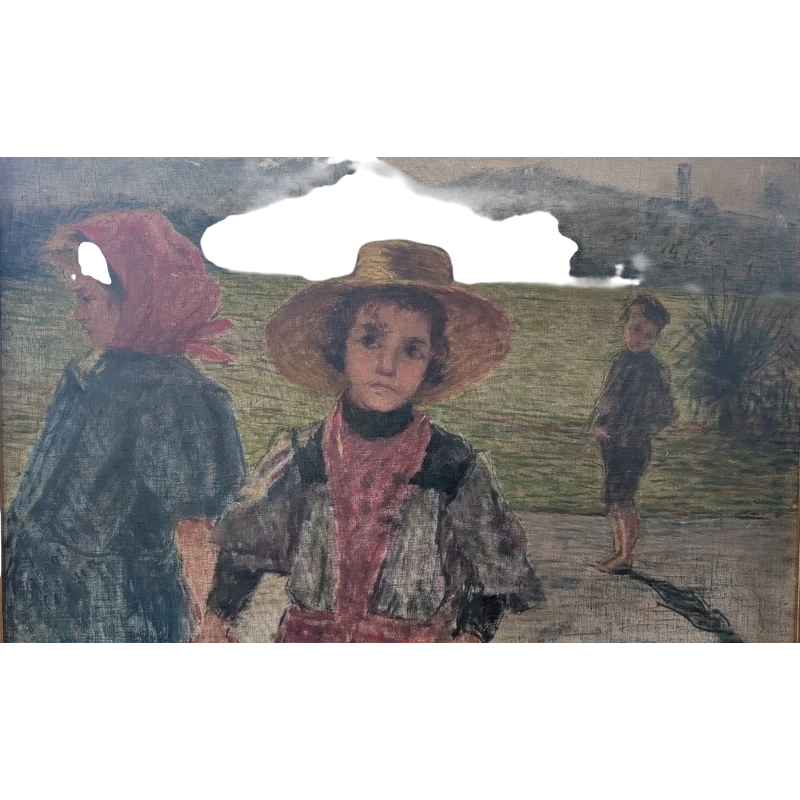
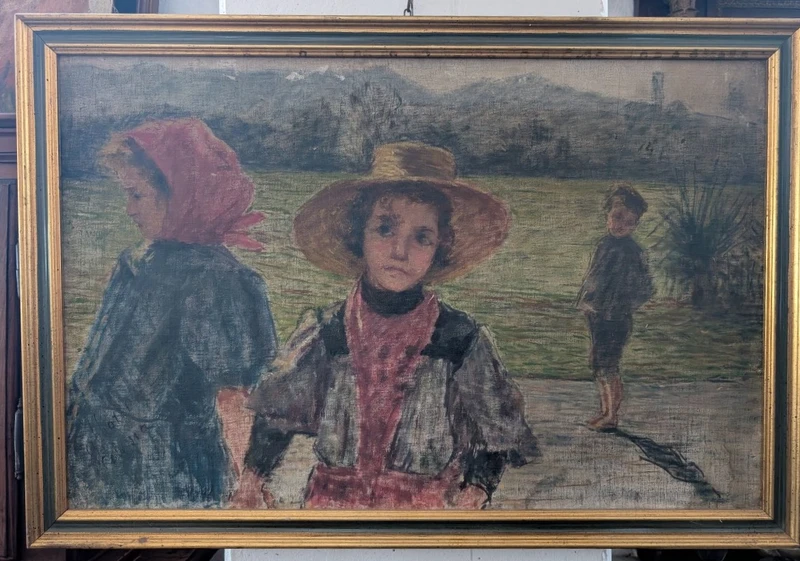
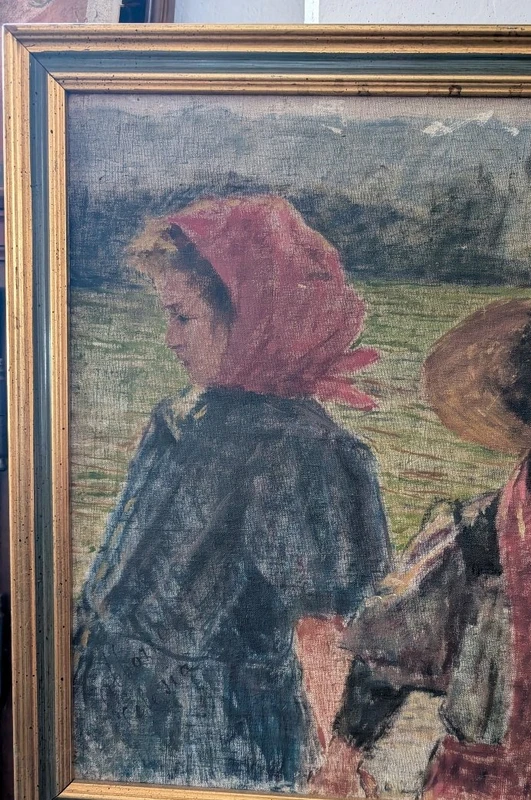
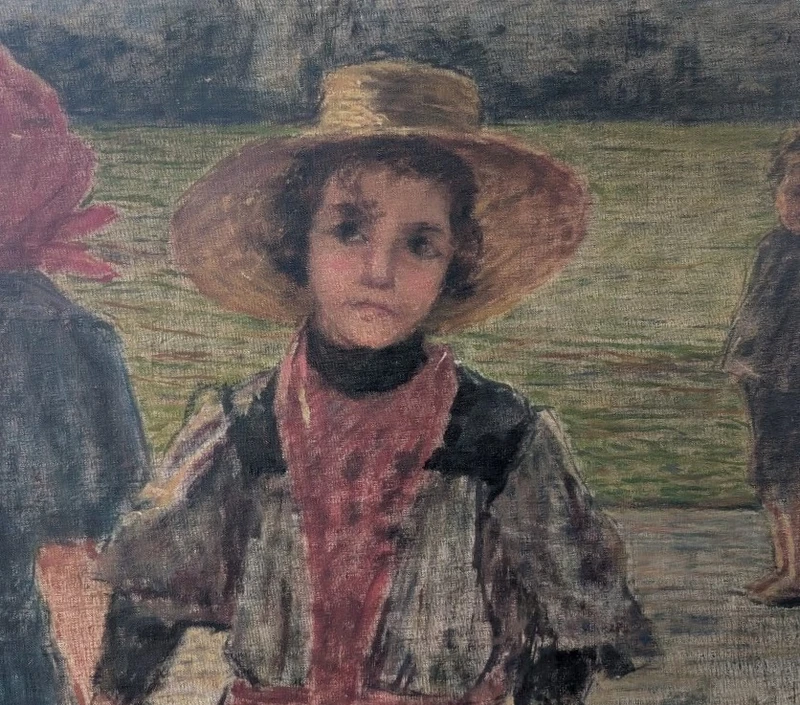
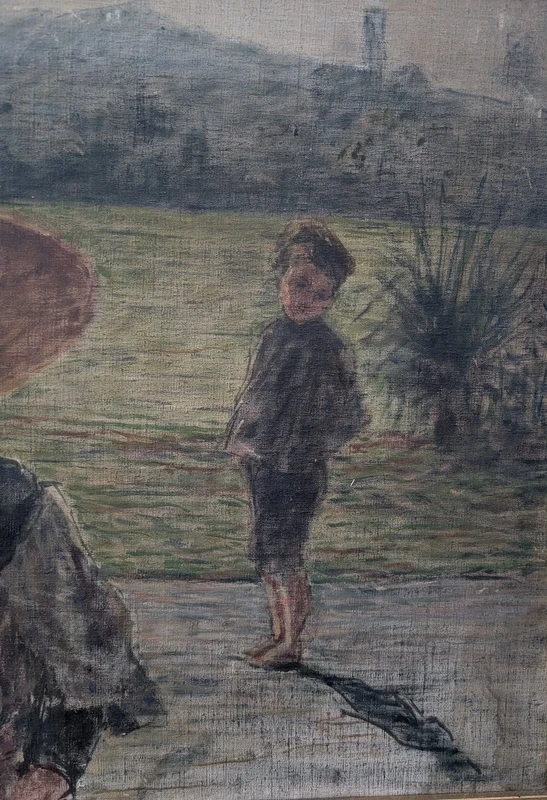
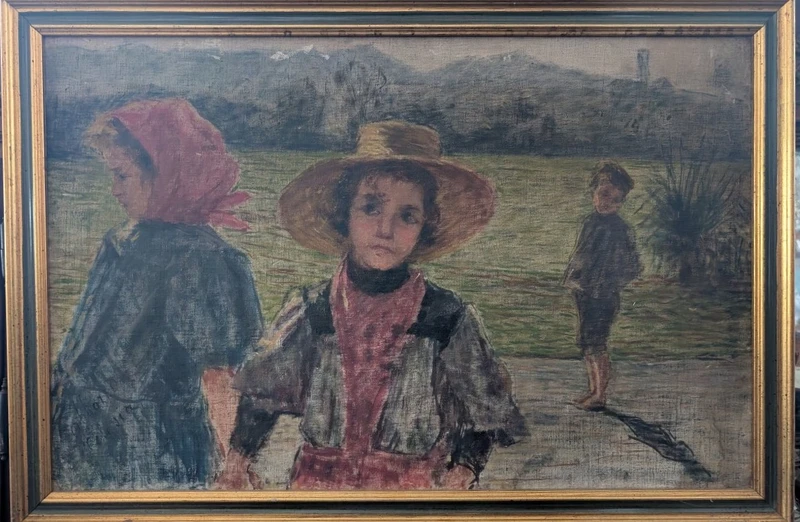
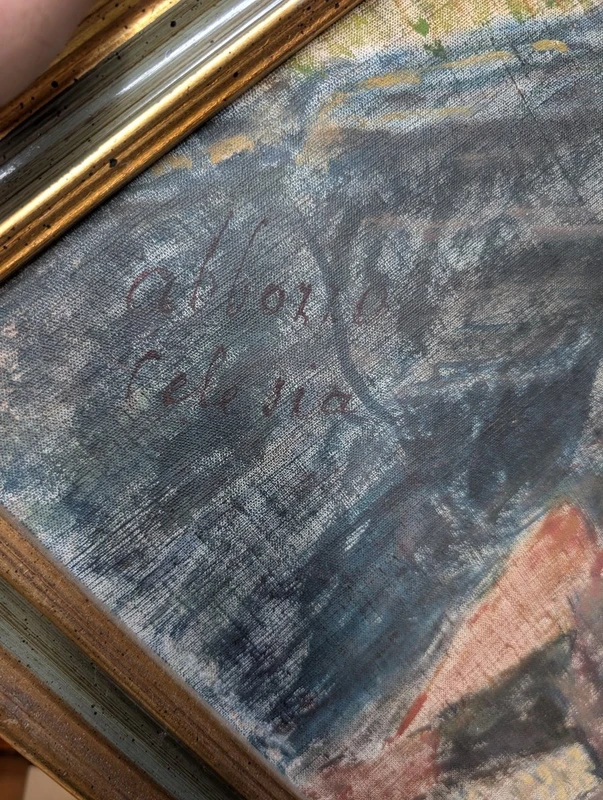
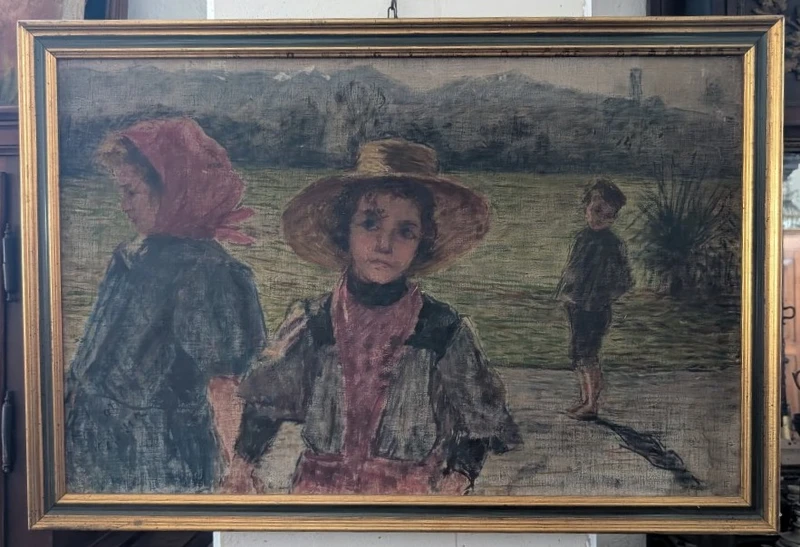
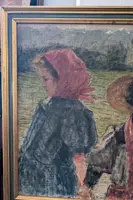
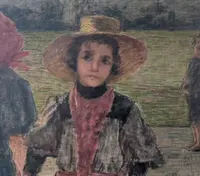
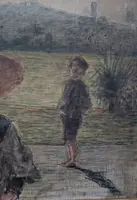
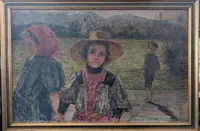
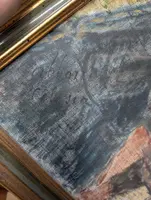
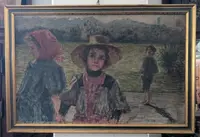
Carla Celesia di Vegliasco (1868–1939) Figures in a Rural Landscape Painting study, early decades of the 20th century. Oil on canvas, signed lower left. Dimensions: - Canvas: 85.5 × 55.5 cm - Frame: 94 × 63 cm An interesting and evocative painting study depicting three young figures immersed in a rural landscape, by Carla Celesia di Vegliasco, an Italian painter and intellectual who was a leading figure in the women’s emancipation movement between the 19th and 20th centuries. The composition, characterized by a free and spontaneous brushstroke, features two young female figures in the foreground; one of them, wearing a wide-brimmed straw hat and a red scarf, looks directly at the viewer, while a third figure appears in the background. The delicacy of the colors, the spontaneity of the poses, and the sensitivity in the rendering of the faces lend the work a particular expressive freshness, attesting to the artist’s painterly qualities. Carla Celesia di Vegliasco was born in Florence in 1868 and received her artistic training in Milan, studying at the studio of the painter Filippo Carcano. She participated in major art exhibitions, including the 1900 Milan Triennale and the 1912 Venice Biennale. Her painting, initially influenced by Impressionist sensibilities, later evolved into a personal interpretation of Symbolism, with a particular focus on the human figure, nature, and the emotional dimension. Alongside her artistic career, Carla Celesia di Vegliasco played a significant role in the cultural and social life of her time, distinguishing herself through her commitment to women’s emancipation. In 1908, she participated in the first Congress of Italian Women in Rome, advocating for women’s right to receive an artistic education equal to that of men. In 1914, she became president of the Italian Women’s Artistic Federation, which was dedicated to promoting and supporting female artists. During World War I, she also helped organize assistance for the families of soldiers. The painting thus represents not only an interesting example of the artist’s work but also a historical record linked to the life of a cultured woman who contributed to the recognition of women’s roles in Italian society and the arts in the early 20th century. A work of particular historical, artistic, and collectible interest.