












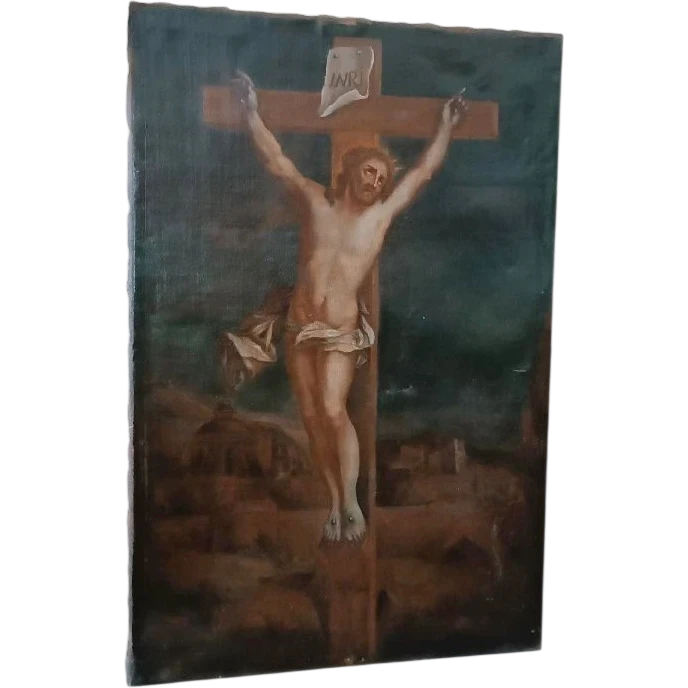

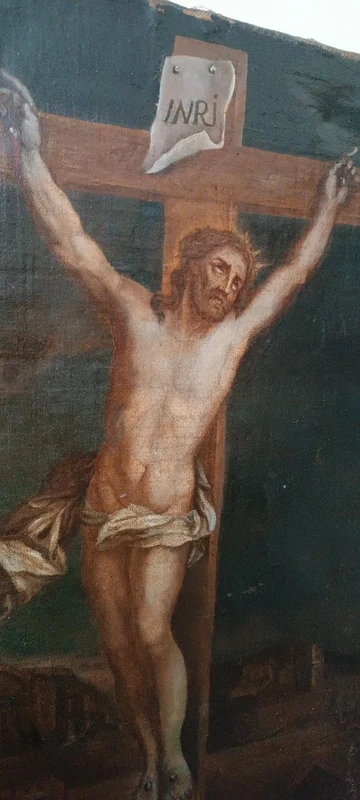
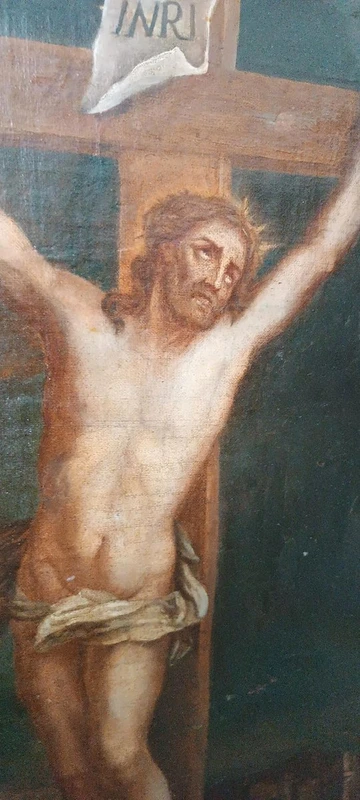
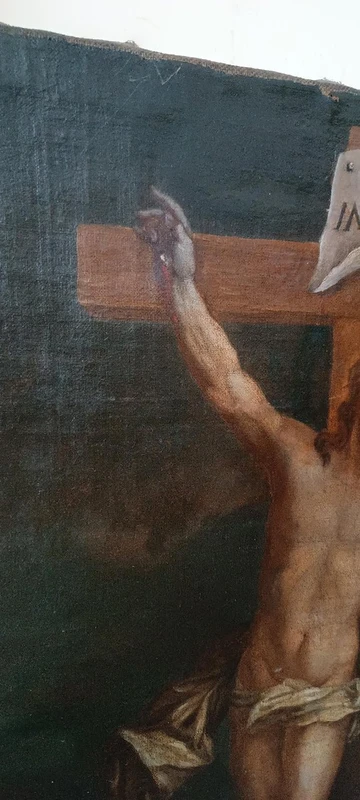
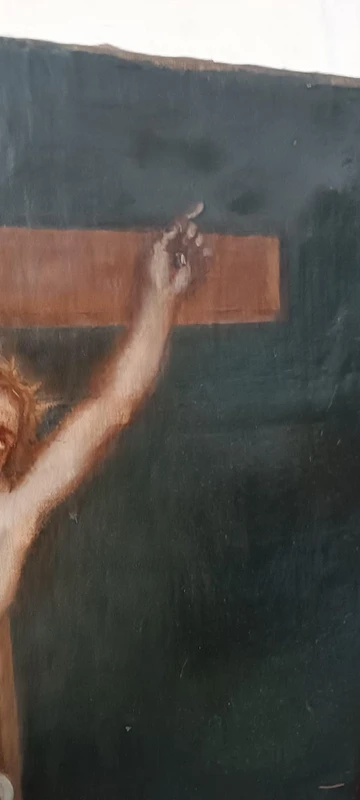









Antique oil on canvas, "The Crucifixion," 18th-century Italian school

Description and details
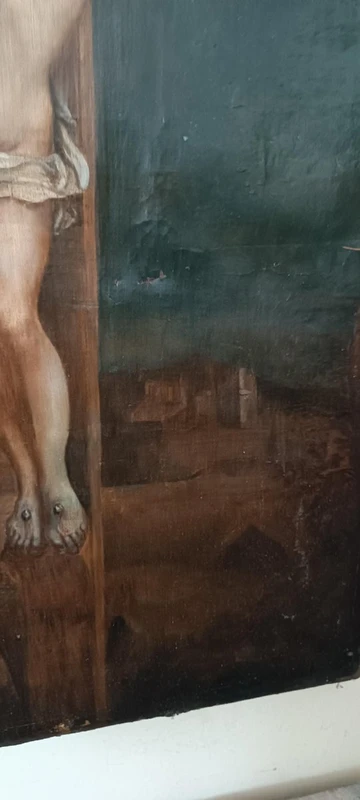
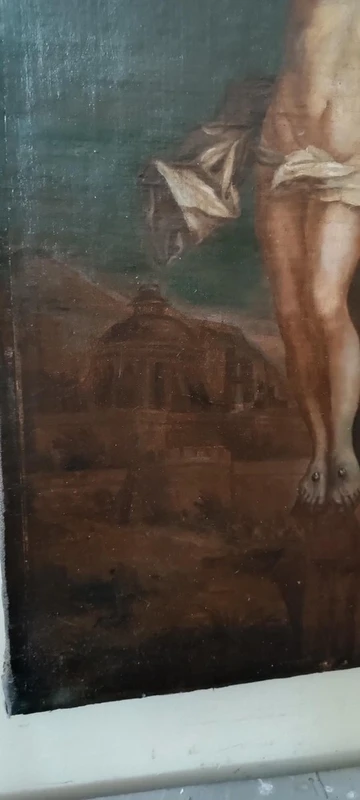
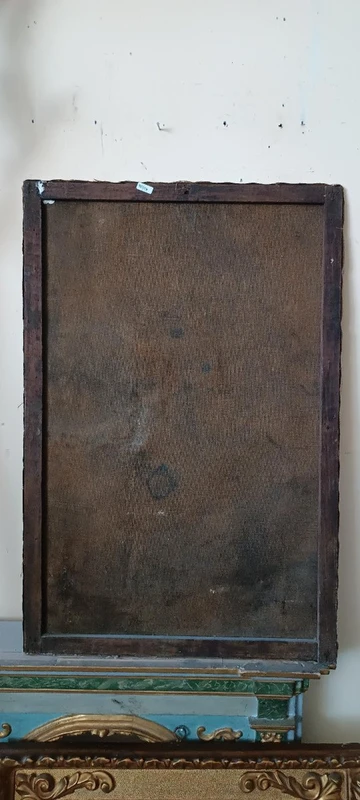
The painting depicts the Crucifixion of Jesus (or "Christ on the Cross"), a classic theme in European religious art. Based on an analysis of its style and details, the work appears to date from the 18th century and can be attributed to the Italian or Flemish school. In particular, Christ’s pose and the dramatic atmosphere recall the famous compositions of the “dying Christs,” influenced by masters such as Anton van Dyck or the workshop of Guido Reni. Details and Iconography Titulus Crucis: At the top, a scroll bearing the inscription INRI (Iesus Nazarenus Rex Iudaeorum) is visible. The Skull: A skull is painted at the base of the cross, traditionally symbolizing the skull of Adam. According to tradition, the crucifixion took place at the burial site of the first man (Golgotha, or “Place of the Skull”), signifying the redemption of original sin through Christ’s sacrifice. Background: The gloomy, cloudy landscape accentuates the moment of “darkness over the whole land” described in the Gospels during Jesus’ agony. The city of Jerusalem is visible in the background. The painting shows no signs of restoration and is on the original canvas— 82 cm x 54.5 cm