

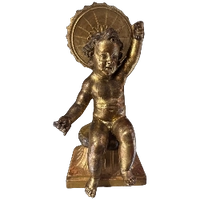

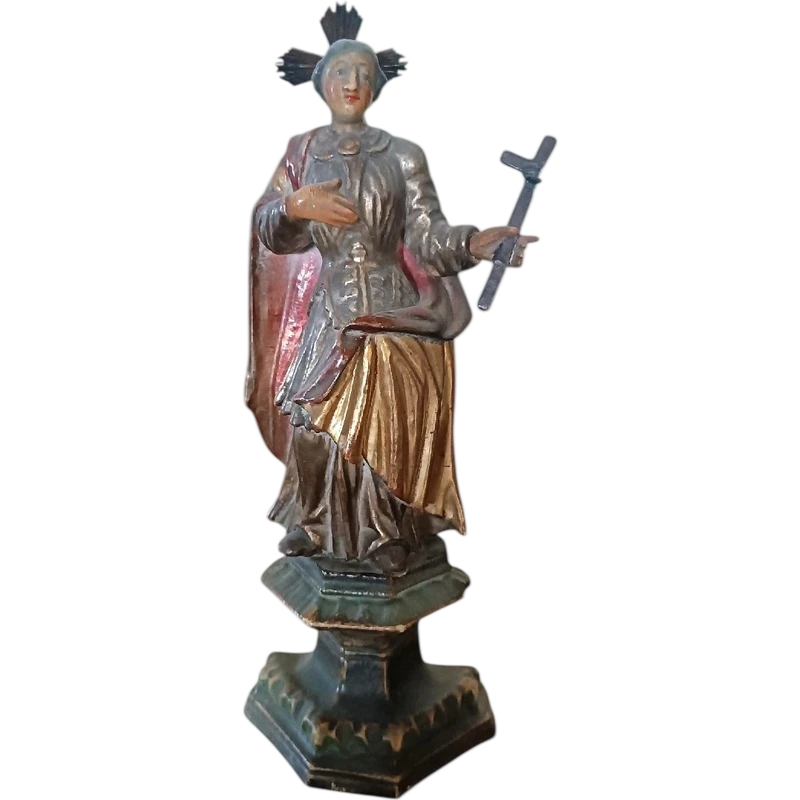
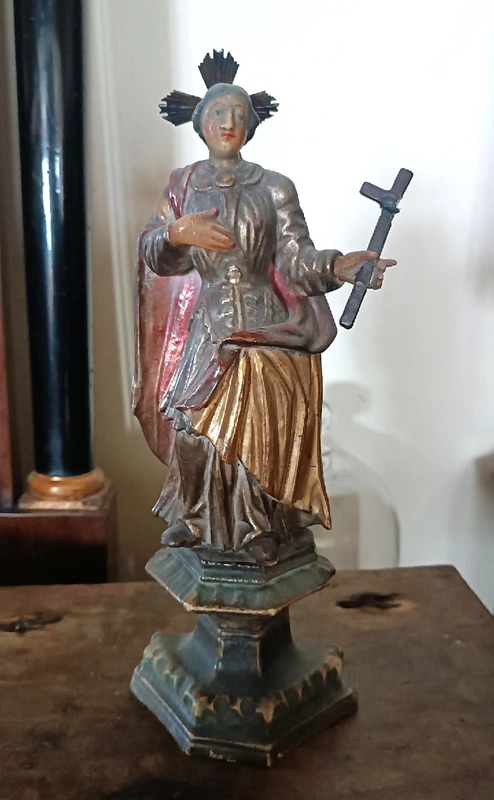
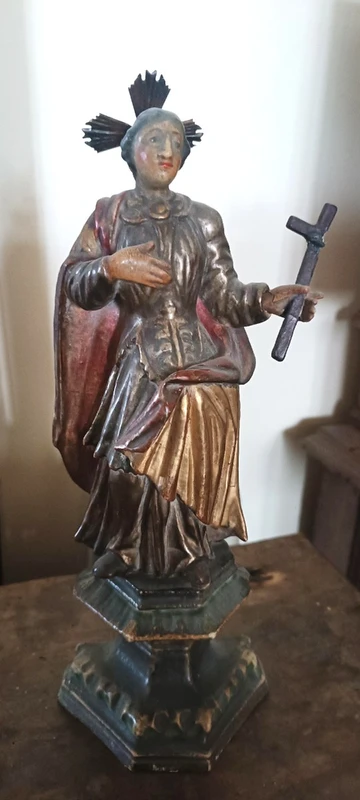
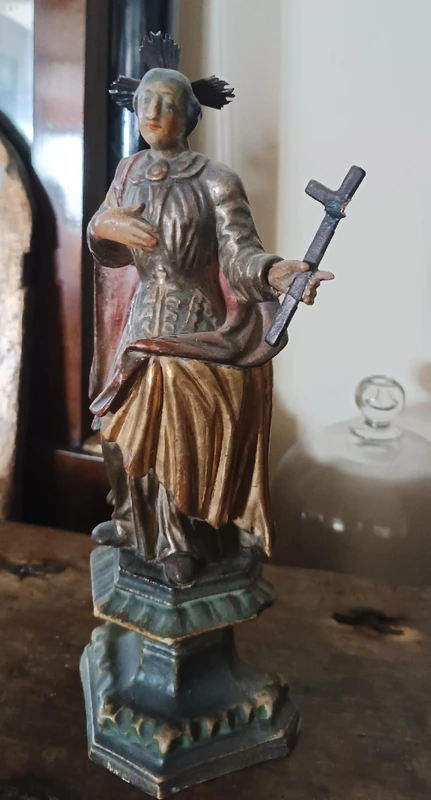
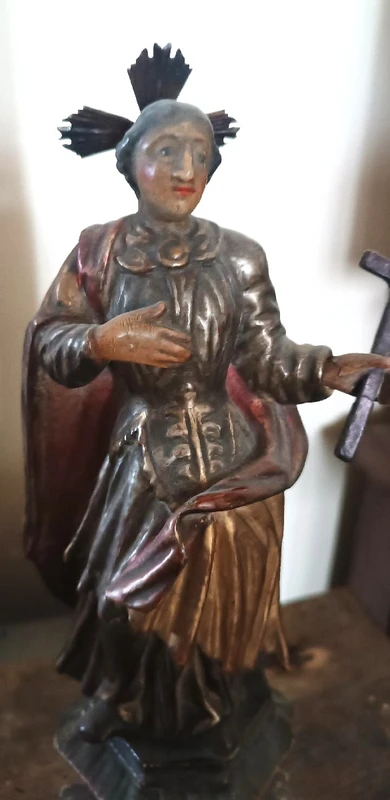
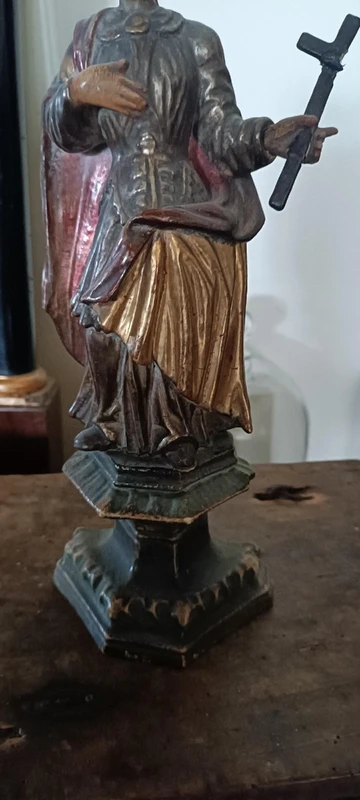
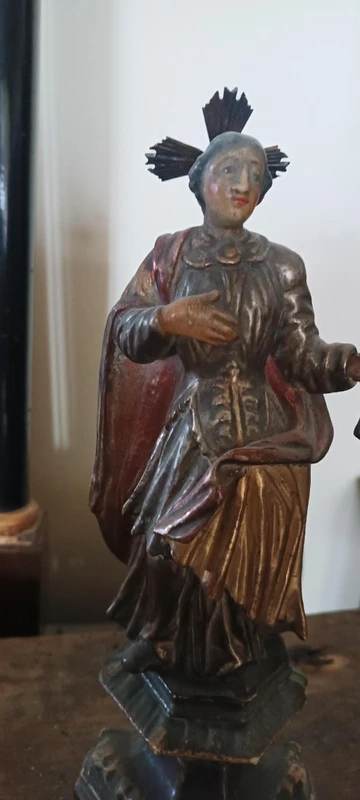
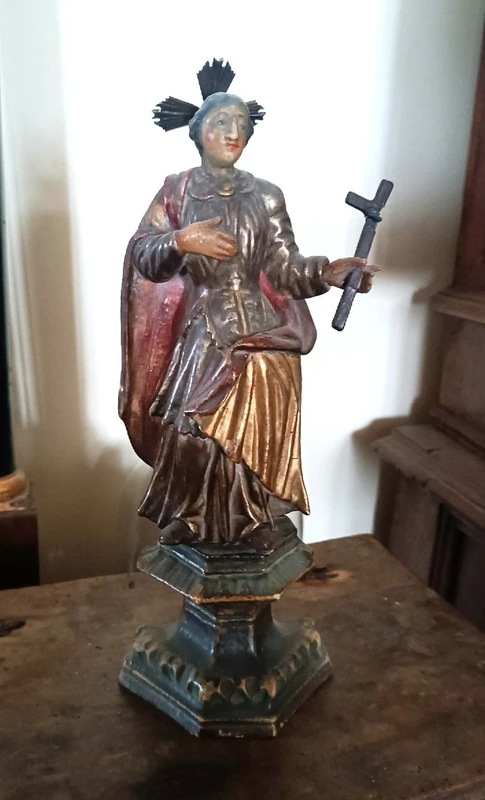
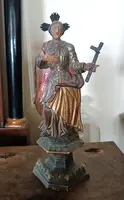

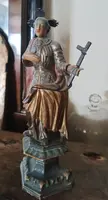
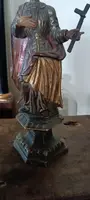
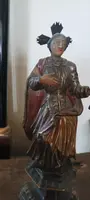
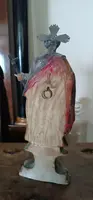
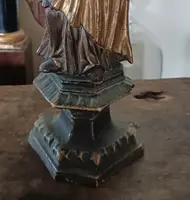
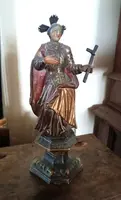
Antique sculpture depicting a saint, made of polychrome and gilded wood—Baroque period

Description and details
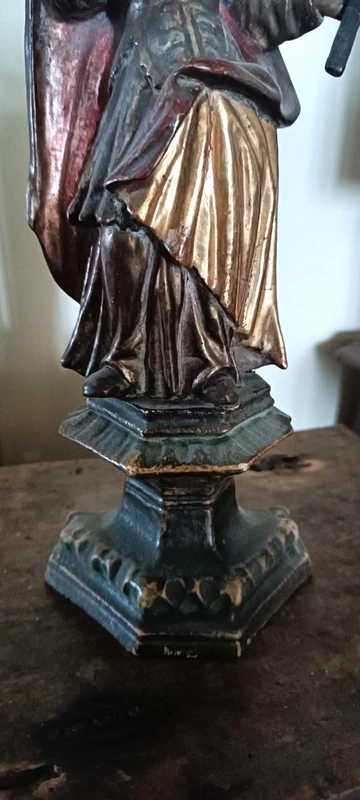
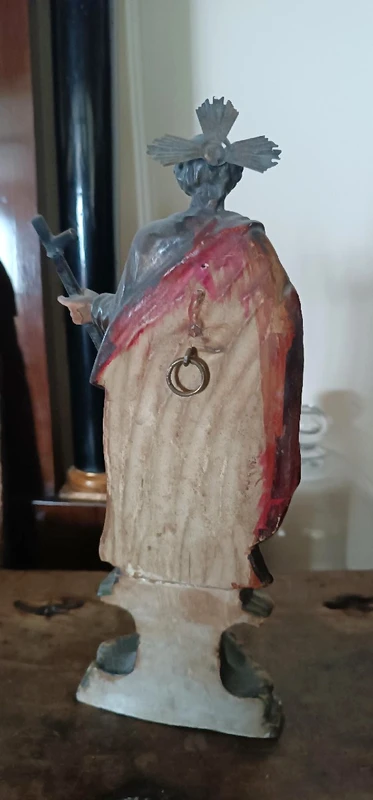
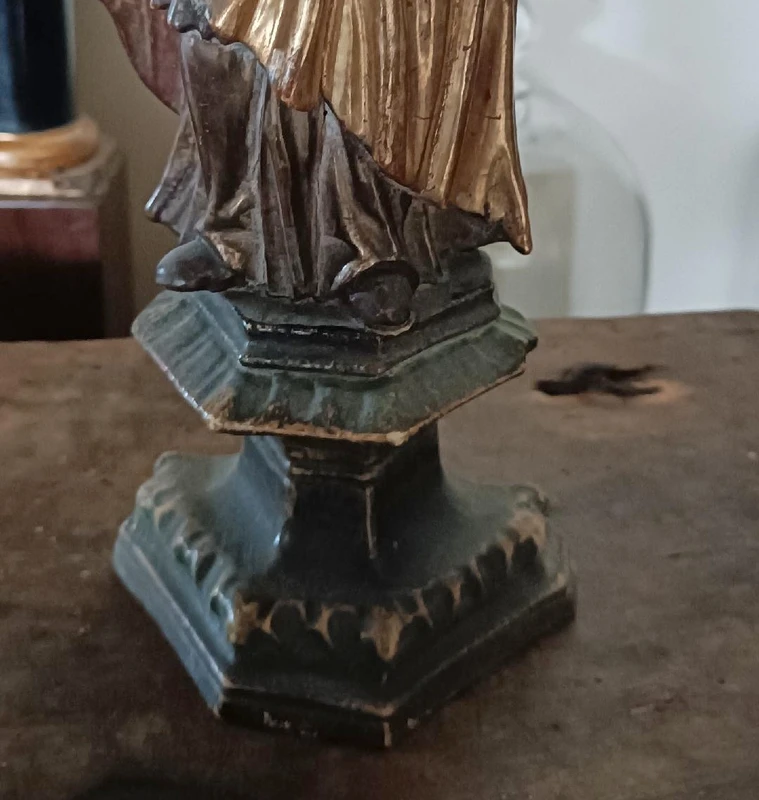
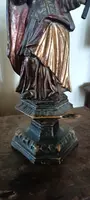
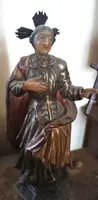
This work is a religious sculpture carved from wood, polychromed, silvered, and gilded, typical of European and Italian devotional art from the Baroque period, dating from the 17th to the 18th century. A visual analysis of the iconographic and structural elements reveals the following main characteristics: The Crucifix: The figure holds a processional cross or a raised crucifix in his left hand. The Hand on the Chest: The right hand resting on the heart expresses deep devotion, submission to the divine will, repentance, or ardent love for Christ. The Rays on the Head (The Three Beams): A silver element on the head. This is not a classic circular halo, but rather three bundles of rays of light radiating outward, a symbol typical of Baroque depictions of saints or the blessed, indicating the illumination of the Holy Spirit and heroic virtue. Style and Craftsmanship Clothing: The drapery of the garments features deep, thick, and geometric folds, with large sections embellished with gold and silver leaf (a technique reminiscent of Spanish and Italian decorations of the era, such as estofado de oro). The dominant colors are lacquered red, brown/black, silver, and gold. The Base: The statue rests on a hexagonal base, molded and lacquered in shades of dark green and gold, a recurring element in private altar or processional statues. The shape of the sculpture’s back and the condition of the polychromy suggest high-quality artisanal craftsmanship linked to a workshop in central or southern Italy (such as the Neapolitan or Sicilian regions) or the Central European tradition. H 31 cm - W 13 cm - D 7 cm